Your portfolio speaks before you do in salon interviews. The difference between getting hired and getting passed over often has nothing to do with technical skill. We’ve seen it play out repeatedly—graduates who can do genuinely excellent work lose opportunities because their portfolio doesn’t communicate that clearly. Meanwhile, candidates with solid but unremarkable technique land positions because they know how to present what they’ve got.
Salon owners and hiring managers go through a lot of portfolios. They know within the first few pages whether someone has put real thought into theirs—and most student portfolios make it obvious they haven’t.
At Cosmetology & Spa Academy, portfolio development is part of the curriculum, not an afterthought. Your technical skills only matter if you can show them effectively. Here’s how to do that.

Why Your Portfolio Matters More Than Your Resume
Cosmetology is a visual profession. Salon owners aren’t hiring credentials—they’re hiring someone who can stand at a chair and deliver results for paying clients. A resume tells them where you trained and how long. A portfolio shows them what you can actually do. When two candidates have comparable experience, portfolio quality is what makes the call.
We train students to treat their portfolio like a marketing piece. You’re selling your skills, your eye, and your attention to detail all at once. Understanding the different beauty industry career paths available to you helps you tailor your portfolio toward the specific positions you want.
Strong portfolios tell a visual story about what you’re capable of and how seriously you take your work. Weak ones—random snapshots with inconsistent lighting, limited variety, no clear organization—tell a different story, and it’s not a good one.
Physical Portfolio vs Digital Portfolio: You Need Both
The industry operates across both in-person and digital spaces, and your portfolio needs to work in both.
Physical portfolios are for interviews, cosmetology career fairs, and any face-to-face meeting where handing something tangible across a desk makes an impression. Use professional presentation books in 11×14 or 8.5×11 format with protective sleeves. Black or neutral covers keep the focus on the work. Aim for 15-25 high-quality printed photos spanning your range of services.
Digital portfolios handle everything else—email applications, social media, online job platforms. A dedicated Instagram account, a simple personal website, or a well-designed PDF that emails cleanly all work. You have more room here—30 to 50 images organized by service type or category gives viewers a thorough picture of your capabilities.
Both versions should feature only your best work. A smaller, consistently strong portfolio will always outperform a larger one with obvious weak spots.
What to Include in Your Cosmetology Portfolio
The goal is strategic variety—proof that you can handle the core services a salon needs delivered on real clients every day.
Haircuts and Styling
When creating your hair stylist portfolio aim for 5-7 haircuts that demonstrate genuine range: women’s layered cuts, blunt cuts and bobs, men’s cuts and fades, texture work and razor cutting, short styles, long styles, updos and special occasion work. If men’s cutting is part of your focus, our guide on top tips for cutting men’s hair is worth working through before you shoot so your technique is sharp. Shoot from multiple angles—front, both sides, back. Use clean backgrounds and natural or professional salon lighting. Never photograph from a single angle and call it done.
Hair Color
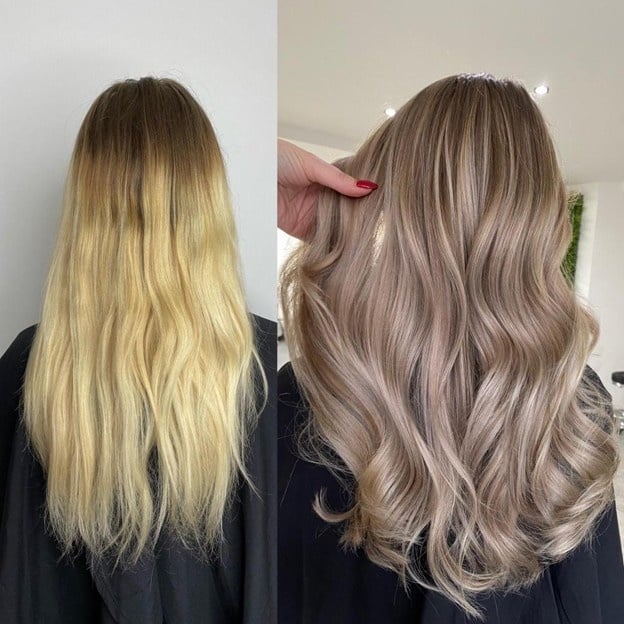
Six to eight color images showing real technical breadth: single-process color, highlights and lowlights, balayage and ombre, color corrections with before and after shots, fashion or vivid color, gray coverage, multi-dimensional work. A solid grasp of hair color theory for stylists means you can not only execute these looks but explain your thinking confidently when interviewers ask about your process. Lighting is everything with color. Shoot immediately after styling while the color looks its freshest.
Makeup Applications
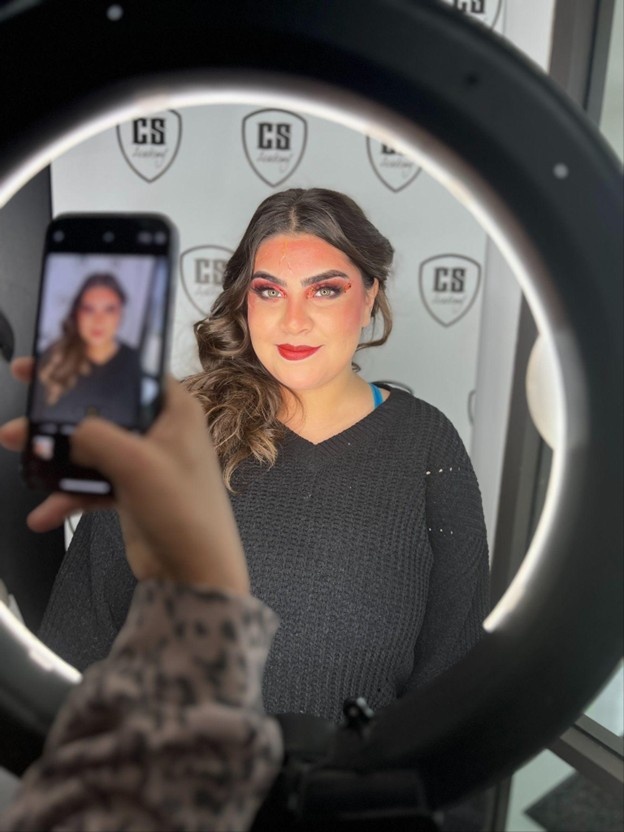
Four to six looks showing range across contexts: natural everyday, bridal or special occasion, dramatic evening, editorial or creative, and ideally across different skin tones. Understanding skin tone undertones shows directly in how your makeup photos read—color harmony is immediately visible to anyone who knows what they’re looking at. Include both close-up detail shots and full-face images showing overall balance.
Special Techniques
Include specialized skills only if you’re genuinely confident in them: extensions, keratin treatments, perms and texture services, braiding and intricate updos, men’s grooming, specialty cutting. If braiding is a real strength, make sure your fundamentals are solid—our guide to braiding African hair covers the techniques that make portfolio-quality work possible.
Weak execution of advanced techniques does more damage than not including them at all.
Before and After Transformations
Three to five strong transformations showing how you solve problems: color corrections, damaged hair recovery, style overhauls, complete makeovers. The before photos matter as much as the afters—poor lighting on the before image makes even a dramatic transformation look unconvincing.
Portfolio Organization That Makes Sense
Disorganized portfolios make hiring managers work harder than they should, and they won’t bother. There are a few approaches that work well depending on your strengths and the position you’re going for.
Organizing by service category keeps similar work together and makes it easy to find. All cuts, then all color, then all styling—straightforward and functional for physical portfolios viewed sequentially. Organizing by skill progression starts with strong foundational work and builds toward more advanced techniques. It shows range and learning arc, which matters for new graduates who don’t yet have years of client work to draw from.
Leading with your absolute best work regardless of category is the most aggressive approach—you grab attention immediately and everything after supports that first impression. A client journey structure works particularly well for before-and-after heavy portfolios—consultation, service, result. This mirrors the structured client consultation approach we teach at Cosmetology & Spa Academy, and it demonstrates that you understand how a service experience actually flows.
Pick one approach and stick to it. Switching organizational logic halfway through reads as careless.
Portfolio Photography Tips for Professional-Looking Images
Bad photography is the most common way great technical work gets wasted. The hair can be exceptional and still look mediocre if the lighting is wrong or the angle is lazy.
- Lighting: Natural light near a window is the most forgiving and accurate for color work. Overhead fluorescent lighting creates unflattering shadows and distorts color. Position your model near a large window with indirect sunlight—not direct harsh light, which creates extreme contrast.
- Background: White, gray, or black walls keep focus entirely on the work. Busy patterns, cluttered salon backgrounds, and distracting props all pull attention away from what matters.
- Angles: Front, both side profiles, and back for every haircut. Getting close enough to show detail while staying far enough back to show overall shape is a balance worth practicing before you shoot portfolio-quality work.
- Model positioning: Good posture, shoulders back, chin slightly forward, relaxed expression. Awkward poses and tilted heads shift the viewer’s eye away from the hair.
- Camera: A modern smartphone with good technique produces excellent results. Clean the lens, use portrait mode or manual focus, avoid zoom, take more shots than you think you need, and select carefully.
- Editing: Adjust brightness, contrast, and color balance to accurately represent the work. That’s it. Over-filtering, heavy airbrushing, and obvious digital manipulation are immediately recognizable and immediately raise questions about your integrity. Don’t do it.
What Salon Owners Actually Look For
We stay in regular contact with salons hiring throughout the region. The same things come up in those conversations consistently.
Foundational competence. Salons need people who can handle a walk-in client on a Tuesday afternoon asking for a basic cut. Before anything else, your portfolio needs to prove you can deliver haircuts, color, and styling reliably. Specialty skills are a bonus. The basics are non-negotiable.
Versatility across hair types. Showing only straight hair suggests either limited experience or discomfort outside a narrow range. Include straight, wavy, curly, and coily textures. Our training emphasizes why mastering textured hair is a competitive advantage, and your portfolio is the most direct way to demonstrate that range to potential employers.
Finishing quality. Clean hairlines, smooth color blending, polished final styles. Salon owners look at the details because sloppy finishing in a portfolio image suggests sloppy work on real clients.
Current techniques. Portfolios that look like they’re from five years ago suggest someone who isn’t actively growing. Balayage, lived-in color, textured cuts, modern men’s grooming—show that you’re paying attention to where the industry is.
Honest representation. New graduates don’t need to pretend they have ten years of experience. Portfolios that accurately represent current skill level while showing growth potential are far more credible than those that overclaim and can’t back it up.
Building Your Portfolio During Training
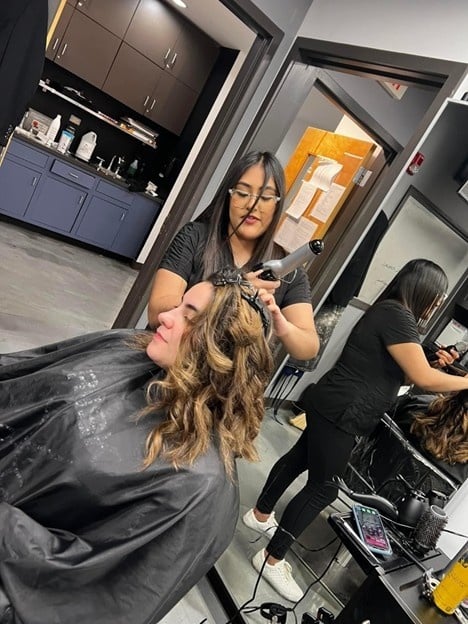
The worst time to start thinking about your portfolio is after graduation. The best time is the first week of training. Photograph your work throughout the program whenever you complete something you’re genuinely proud of. Ask instructors for honest feedback about what’s portfolio-worthy and what isn’t.
At Cosmetology & Spa Academy, we build dedicated portfolio sessions into the program—students create looks specifically for documentation with proper lighting and backgrounds set up for that purpose.
Friends and family who sit for practice sessions become portfolio subjects. Being upfront that you need high-quality documentation creates a fair exchange for their time.
For clients at the student salon, always ask permission before photographing and explain how you’ll use the images. Most people are genuinely pleased to be asked.
The portfolio should keep evolving throughout training—replace earlier, weaker work as your skills improve. By graduation, the goal is 20-30 strong images ready to walk into any interview. For a sense of the timeline you’re working with, our breakdown of how long cosmetology school takes in Illinois helps you plan the portfolio-building process from day one.
Digital Portfolio Platforms and Tools
Instagram is the most important digital platform for working cosmetologists. Create a dedicated professional account separate from your personal one, post consistently, and use relevant hashtags. Salon owners actively scout Instagram when they’re hiring, and a well-maintained account functions as a living, constantly updated portfolio. Our guide on using Instagram and TikTok to grow a beauty business in Illinois covers the specific strategies that actually move the needle.
Personal websites through Squarespace, Wix, or WordPress give you a more polished, professional home base for your portfolio. An about page, a gallery organized by service, and clear contact information is all you need. Budget $10-25 monthly for hosting and a domain name.
Canva has solid free templates for building PDF portfolios you can email to potential employers or attach to applications. Stick to clean, minimal designs that keep focus on the images.
LinkedIn is worth setting up, especially if you’re interested in working for larger salon groups or corporate spa environments that recruit through professional networks.
Templates and Organization Portfolio Examples
Template 1: Service-Based Cover page → Haircuts (8-10 images) → Color (8-10 images) → Styling and updos (5-7 images) → Makeup (4-6 images if applicable) → Before/after transformations (3-5 spreads) → About me page
Template 2: Strength-First Cover page → Best 10 images regardless of category → Supporting haircut work (5-7 images) → Supporting color work (5-7 images) → Supporting specialty work (5-7 images) → Before/after transformations (3-5 spreads) → About me page
Template 3: Client Journey Cover page → Consultation/before images with context → Cut transformation sequence → Color transformation sequence → Style transformation sequence → Additional strong work by category (10-15 images) → About me page
Choose based on where your strengths are and what positions you’re targeting.