
You’ve saved a dozen photos of sun-kissed, dimensional hair. You know you want to go lighter. But when it’s time to book, you hit the big question: should you ask for balayage or highlights?
Quick answer: Balayage is a freehand technique where a colorist paints lightener onto the surface of the hair, starting below the root, for a soft, natural, low-maintenance result. Highlights use foils to lighten sections from the root to the ends, for brighter, more uniform color that needs a touch-up more often. Choose balayage for a lived-in look and fewer salon visits; choose highlights if you want to go noticeably blonder all over.
The two terms get used interchangeably, but they create different looks, grow out differently and need different levels of upkeep. Knowing the difference helps you get the color you actually want.
Key Takeaways
- Balayage is hand-painted, starts below the root and grows out softly, with touch-ups about every 3–4 months.
- Highlights are placed in foils from the root, lift brighter and need a touch-up about every 6–8 weeks.
- Balayage usually costs more per visit but can cost less per year because you go less often.
- Foilayage, babylights and face-framing “money pieces” sit between the two.
- Lightened hair needs color-safe products, heat protection and sun protection to stay healthy.
What Is Balayage?
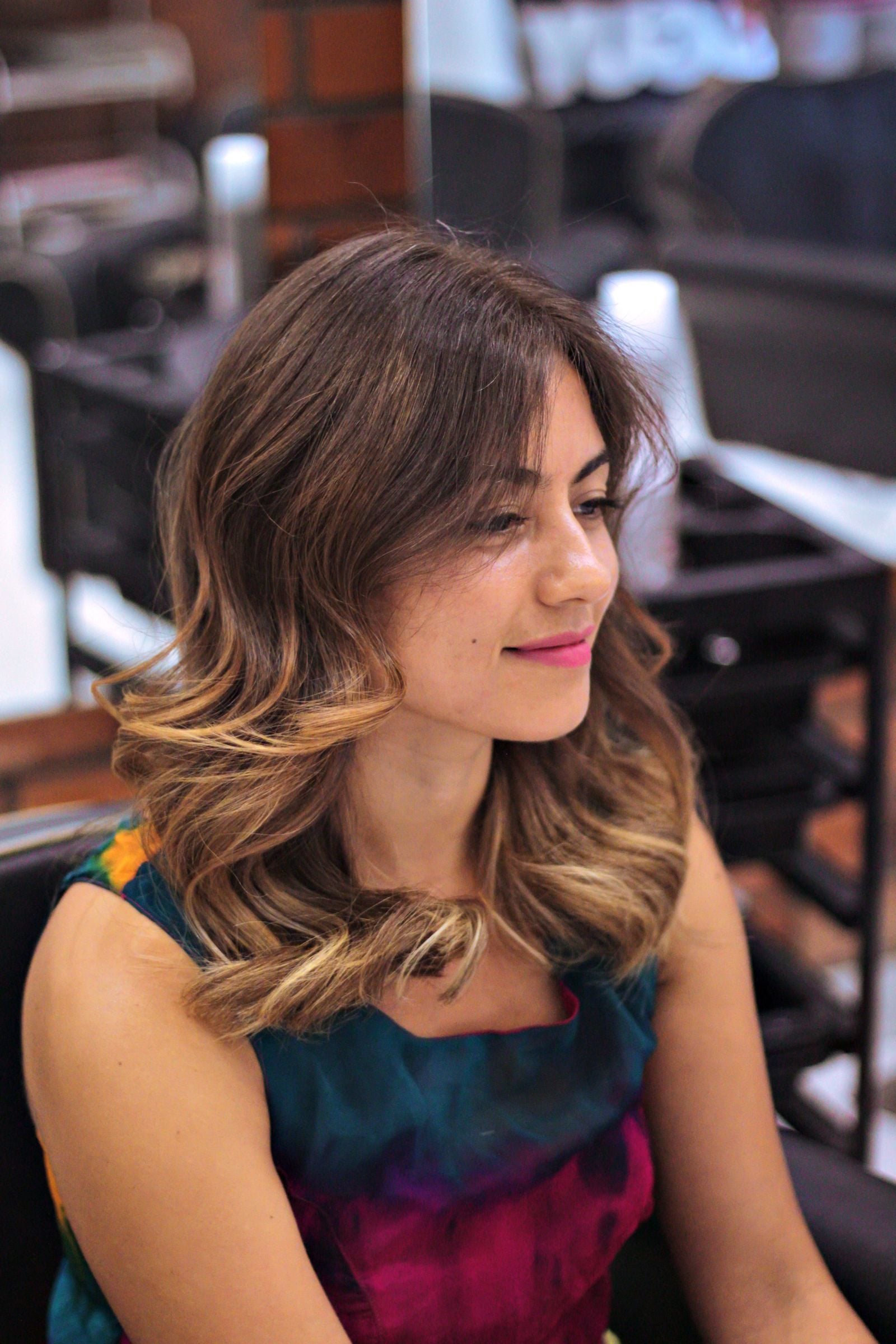
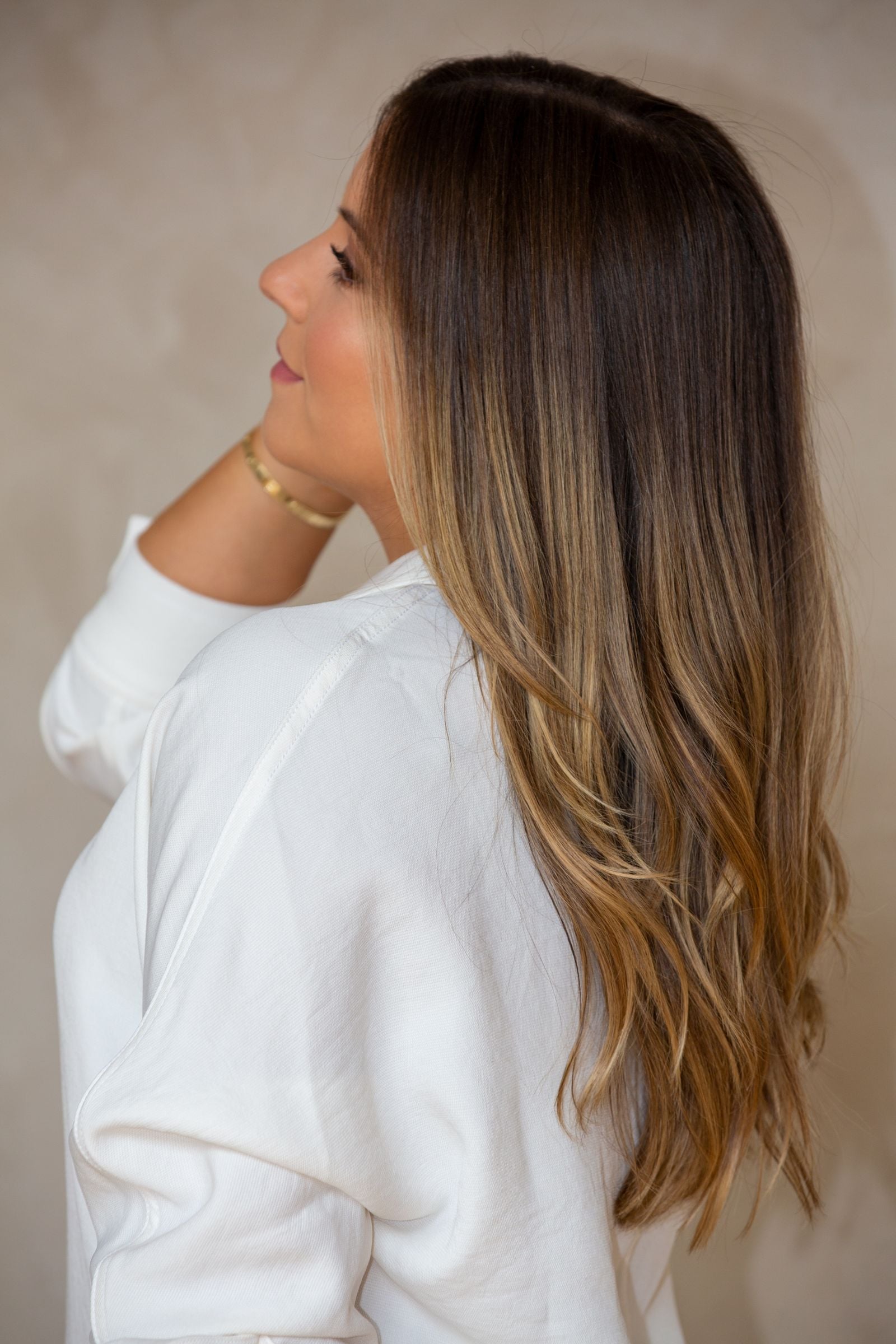
Balayage comes from the French word balayer, which means “to sweep.” Instead of sectioning hair into foils, the colorist hand-paints lightener directly onto the surface of the hair in soft, sweeping strokes.
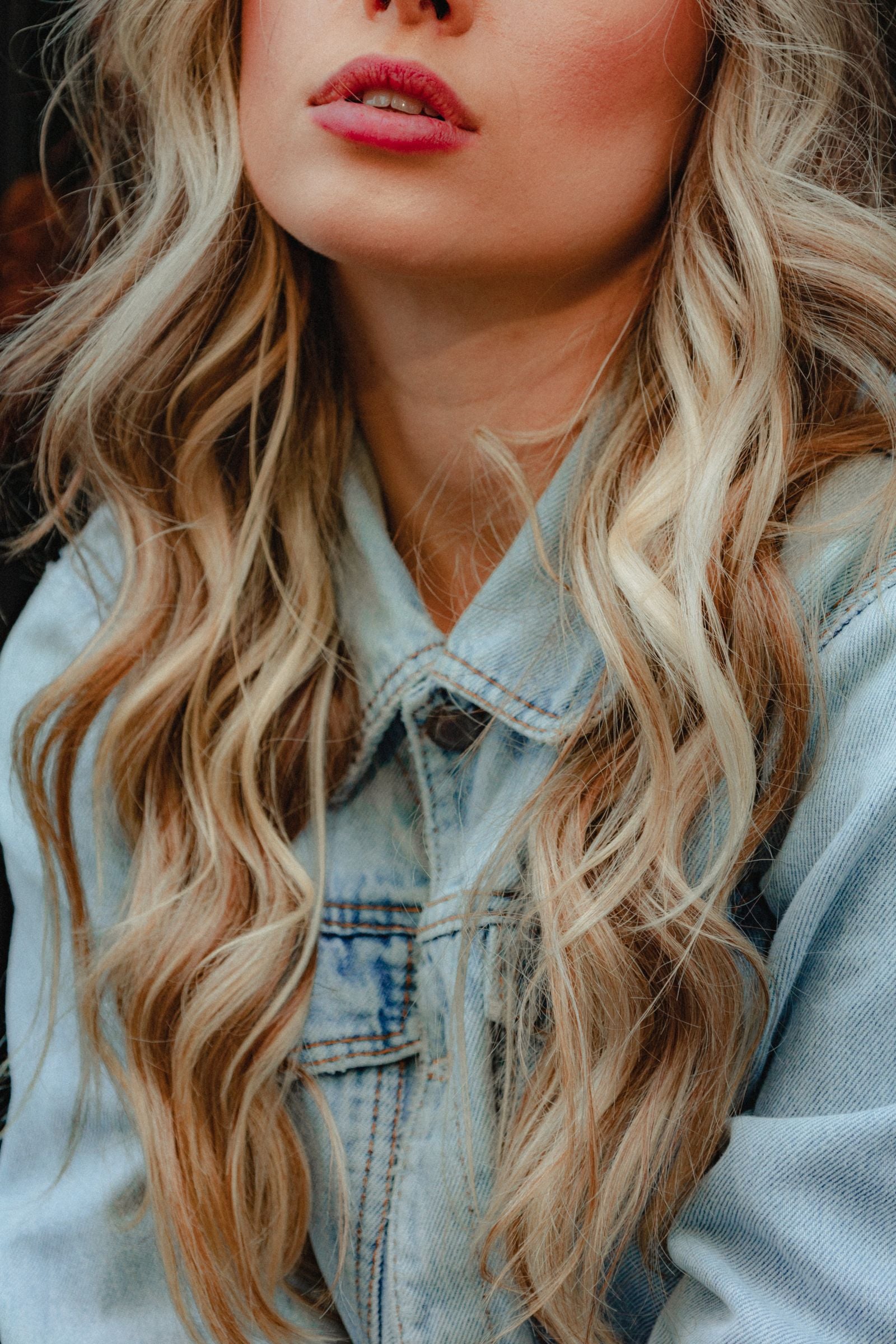
The painting usually starts a little below the root and gets heavier toward the ends. The result is a natural, graduated look, like hair that has been lightened by months in the sun. Because there’s no harsh line at the root, balayage grows out softly.
- Freehand painting technique, with no foils or very few
- Soft, blended, lived-in result
- Lighter pieces concentrated toward the mid-lengths and ends
- Lower maintenance, with touch-ups about every 3 to 4 months
What Are Highlights?
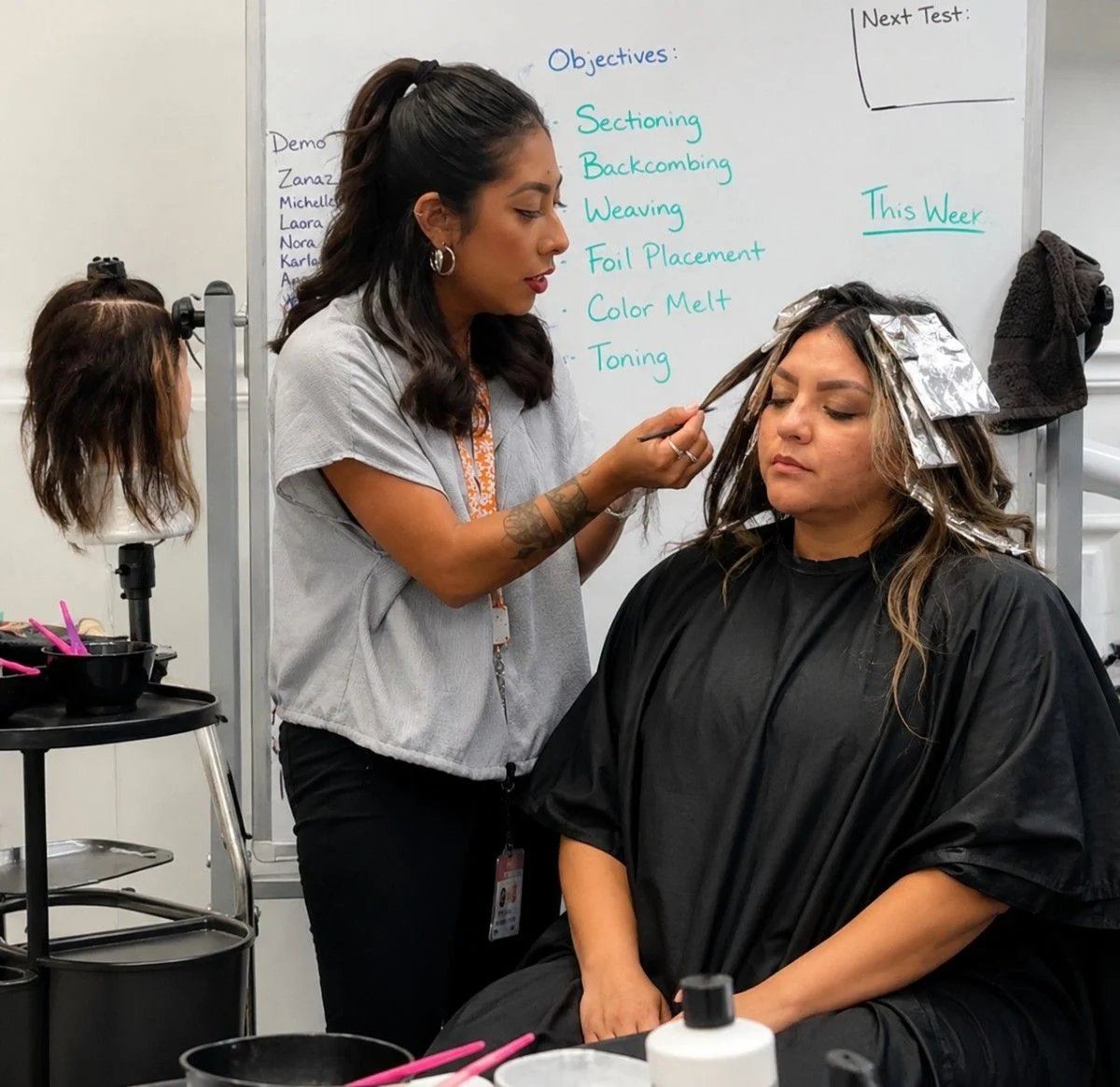
Traditional highlights use foils to isolate thin sections of hair from root to tip. Lightener is applied evenly to each section, then the foil is folded to hold it in place and help it lift evenly.
Because the lightener goes right up to the scalp, highlights create brighter, more uniform dimension all over the head. You can go much lighter with foils, which makes highlights the go-to for clients who want a bold blonde result.
- Foil technique with precise, structured placement
- Lightness starts at the root
- More noticeable brightness and contrast
- Higher maintenance, with touch-ups about every 6 to 8 weeks
Balayage vs. Highlights: Side-by-Side Comparison
| Balayage | Highlights | |
|---|---|---|
| Technique | Hand-painted, freehand | Sectioned and wrapped in foils |
| Where color starts | Below the root | At the root |
| Look | Soft, natural, sun-kissed | Bright, uniform, structured |
| Grow-out | Seamless, no harsh line | Visible regrowth line |
| Touch-ups | About every 3–4 months | About every 6–8 weeks |
| Best for | Brunettes, low-maintenance clients, long hair | Going very blonde, blending grays, short cuts |
| Lift potential | Moderate | High |
How to Decide Which One Is Right for You
There’s no single “better” option. The right choice depends on your goals, your hair and how often you want to be in the salon chair.
Choose balayage if you:
- Want a natural, lived-in look that doesn’t scream “I just colored my hair”
- Have medium to long hair, where sweeping placement really shows
- Prefer fewer salon visits and a soft grow-out
- Have dark hair and want warmth or dimension without going fully blonde
Choose highlights if you:
- Want noticeably brighter or blonder hair from root to tip
- Have short hair, like a pixie or bob, where precise placement matters
- Want to blend gray hair more evenly
- Love a polished, uniform look and don’t mind regular maintenance
Your skin tone matters too. Warm caramel and honey tones flatter some people, while cool ash or platinum suits others. Our guide to finding your skin tone and undertones will help you narrow it down.
What About Ombré, Babylights and Foilayage?
Color menus keep growing, and a few other terms come up often during consultations.
- Ombré is a bold, high-contrast fade from dark roots to much lighter ends. It’s more dramatic than balayage. Learn more in our post on the top 3 ways to do ombré hair.
- Babylights are ultra-fine highlights that mimic the natural lightness of children’s hair, for subtle brightness without obvious stripes.
- Foilayage is a hybrid: the colorist hand-paints like balayage but wraps sections in foil for more lift.
- Face-framing highlights, often called a “money piece,” brighten just the strands around the face for an easy, low-commitment pop of color.
For something more daring, check out our guide to oil slick hair color for brunettes.
How Long Does Each Service Take?
Timing depends on your hair’s length, thickness and starting color, but these are typical ranges:
- Partial highlights: about 1.5 to 2 hours
- Full highlights: about 2 to 3 hours
- Balayage: about 2.5 to 4 hours, including toning
- Foilayage or major lightening: 3 to 5 hours or more
Going from very dark to very light often takes more than one appointment to keep your hair healthy. A good colorist will tell you honestly what’s possible in one sitting.
How to Care for Lightened Hair
Whether you choose balayage or highlights, lightened hair needs extra care to stay bright and healthy.
- Use a sulfate-free, color-safe shampoo. Harsh cleansers strip tone faster.
- Tone with purple or blue shampoo once a week if you notice brassiness.
- Deep condition weekly. Lightener opens the cuticle, so moisture is key.
- Turn the heat down. The American Academy of Dermatology recommends low or medium heat settings and a heat protectant on every hair type.
- Protect hair from the sun. The AAD notes that the sun can leave hair weak, dry, faded and brittle, so wear a wide-brimmed hat outdoors.
- Book a gloss or toner between appointments to refresh shine and tone, and keep up with regular trims. Our guide on how often you should get a haircut covers color-treated hair.
Chlorine and hard water can also dull or shift your color, so rinse your hair with clean water after swimming and use a clarifying or chelating shampoo now and then if your water is hard. Our guide to environmental effects on hair and skin covers sun, chlorine and hard water in more detail.
What to Say at Your Color Consultation
The best way to get the color you want is to communicate clearly. Before your appointment:
- Bring 2 to 3 inspiration photos, plus one photo of a look you don’t want.
- Be honest about your color history, including box dye, henna or past lightening.
- Share your maintenance budget and how often you’re willing to come back.
- Ask how many sessions it will take to reach your goal safely.
A skilled colorist looks at your hair texture, your skin tone and your lifestyle before recommending a technique. That’s the science behind great color, and it’s why our students spend so much time on color theory.
Try Balayage or Highlights at an Affordable Price
Looking for beautiful color without the high salon price tag? Our student salon offers balayage, highlights, toning and more, performed by advanced cosmetology students under the guidance of licensed instructors. Visit us in Crystal Lake, Elgin, Rockford or Schaumburg.
And if you’ve ever thought about being the one holding the color brush, explore our cosmetology program.
Frequently Asked Questions
Is balayage or highlights better for brunettes?
Balayage is often the favorite for brunettes because it adds warmth and dimension without high-contrast regrowth. If you want to go significantly blonder, highlights or foilayage give you more lift.
Which lasts longer, balayage or highlights?
Balayage usually lasts longer between appointments, about 3 to 4 months. Highlights show regrowth sooner and usually need a touch-up every 6 to 8 weeks.
Is balayage more expensive than highlights?
Balayage often costs more per appointment because it takes longer and requires advanced freehand skill. Since you visit the salon less often, it can cost less over a full year.
Can you do balayage on short hair?
Yes, but there’s less length to sweep the color through, so the effect is subtler. Many colorists combine balayage with fine highlights on bobs and lobs.
Does balayage damage your hair?
Any lightening service affects the hair’s structure. Balayage is often gentler because less hair is lightened near the scalp. Bond-building treatments, low heat and good aftercare go a long way toward keeping hair healthy.
Can I switch from highlights to balayage?
Yes. Your colorist can let your roots grow slightly, then blend your existing highlights into a softer, painted look over one or two appointments.
Sources
- Tips for healthy hair, American Academy of Dermatology
- Coloring and perming tips for healthier-looking hair, American Academy of Dermatology