We had a student show up last month. She’d been watching YouTube tutorials for two years. Her blending needed improving. Her technique for mature skin was identical to her technique for 20-year-olds. Product knowledge and technique are completely different things. One you can Google. The other requires proper training and hands-on practice with real faces. That’s the gap between dabbling and professional makeup artistry. Let’s talk about what makes a top-rated beauty school guarantee quality makeup artistry training.

Hands-On Practice With Real Clients Matters Most
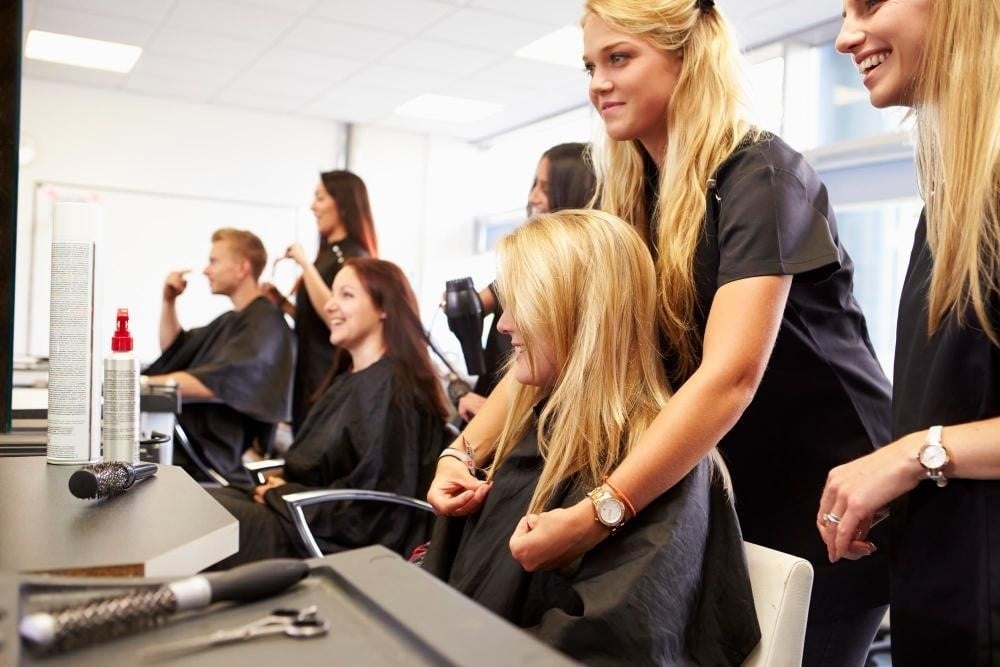
Theory only gets you so far. You need faces. Lots of them. Different skin tones, textures, ages, and features. We structure our programs around maximum client contact because that’s where learning happens. You can practice on yourself a hundred times, but that doesn’t prepare you for hooded eyes, oily skin, or someone who moves constantly in the chair.
Look for programs that get you working on real people early. Not just your classmates trading services. Actual clients with appointments, expectations, and different needs than your practice partners.
The number of hours matters, but what you do during those hours matters more. Sitting in lectures about color theory isn’t the same as correcting a foundation mismatch on a client with deep undertones.
At Cosmetology & Spa Academy, we emphasize repetition with feedback. You’re doing makeup applications almost daily, with instructors watching, correcting, and pushing you to improve.
That’s how muscle memory develops. That’s how you learn to work quickly without sacrificing quality. That’s how you build the confidence to handle whatever walks through the door.
Instructors Need Current Industry Experience
Your instructor’s resume matters. Not just their license, but their actual work history.
We’ve all seen “certified” instructors who haven’t worked a paying gig in ten years. Techniques evolve. Products change constantly. Social media shifted what clients expect. An instructor stuck in 2015 isn’t preparing you for 2025.
Our makeup instructors have worked fashion shows, weddings, photo shoots, special effects projects, and salon floors. They know what clients actually request. They understand Instagram makeup versus real-world wearability. They’ve dealt with bridezillas, demanding photographers, and last-minute changes.
That experience shows up in teaching. They share real scenarios, not textbook examples. They teach you how to handle a client who brings a Pinterest board of faces that look nothing like theirs. How to work quickly when you’re running behind. How to fix mistakes without the client noticing.
Ask schools about instructor backgrounds. Where have they worked? Do they still take clients? Can they show you their professional portfolio?
If the answers are vague or defensive, keep looking.

Product Knowledge Goes Beyond Brand Names
Quality programs teach you to work with various product types, not just one brand’s line. We train students on professional-grade products from multiple companies because that’s what the industry requires. You’ll encounter drugstore budgets and luxury preferences. Cream foundations and powder. Traditional and airbrush applications.
Understanding why you’d choose one product over another for specific situations—that’s professional knowledge. Memorizing one brand’s catalog isn’t. The best training also covers skin preparation, primer selection, setting techniques, and longevity solutions. Makeup that photographs beautifully but melts off in two hours isn’t professional work.
We teach students to assess skin type, climate, event duration, and photography needs before selecting products. That analytical approach separates hobbyists from professionals.
👉 Learn more about cosmetology program!
Specialized Training for Different Makeup Contexts
Bridal makeup is completely different from editorial. Everyday beauty differs from theatrical. Film and TV makeup follows different rules than in-person events. Quality programs expose you to multiple contexts so you can choose your specialization or work across various settings.
We cover bridal and special event makeup extensively because that’s where many graduates build their business. But we also teach editorial techniques, corrective makeup, makeup for photography, and mature skin applications.
You might discover you love theatrical work but hate bridal. Or that you’re brilliant at natural, everyday looks but struggle with dramatic editorial styles. Training should help you find your strengths and interests.
Schools that only teach one style limit your career options before you even start.
Business Training Makes or Breaks Your Success
You can be incredibly talented and still fail as a makeup artist if you don’t understand pricing, marketing, booking, and client management. We include business education in our programs because technical skills alone don’t pay bills. You need to know how to calculate service costs, build a portfolio, market your services, manage bookings, and handle difficult client situations.
Schools that offer makeup artistry programs know that this line of work is often freelance work. You’re running a business even if you’re not opening a salon. Understanding contracts, deposits, cancellation policies, and professional boundaries protects you and your income.
We’ve seen talented artists struggle because they underpriced themselves or couldn’t market effectively. We’ve also seen moderately skilled artists thrive because they understood business fundamentals.
Ask potential schools if business training is included. How much time is devoted to it? Do they cover pricing strategies, social media marketing, portfolio development, and client contracts?
This education is as important as learning to apply false lashes.
Interested in learning more? Check out our makeup artist career guide!

Equipment and Facility Quality Tells You Everything
Tour the training space. Look at the lighting, mirrors, workstations, and equipment available.
Makeup artistry requires proper lighting. Natural light simulation matters because you need to see true colors. Poor lighting produces poor work, and you won’t realize it until the client steps outside.
Check the products and tools available. Are students working with professional-grade materials or cheap alternatives? Quality tools and products cost more, but they’re what you’ll use professionally.
We’ve invested in our facilities because we refuse to train students on substandard equipment. The gap between student-grade and professional-grade is huge. We want our graduates comfortable with professional standards from day one. Book a tour to check out our campuses!
Portfolio Development Should Be Built In
Your portfolio is your resume in this industry. Programs should include structured portfolio-building opportunities. We schedule portfolio sessions where students create finished looks specifically for their professional portfolios. Proper photography, various styles, and guidance on selecting images that showcase range and skill.
Students graduate with portfolio-ready images they can immediately use for marketing. That’s not an extra service. That’s essential training.
Some schools treat portfolio development as the student’s problem. Quality programs understand it’s crucial to your career launch and build it into the curriculum.
The Reality Check Nobody Mentions
Makeup artistry is competitive. Income varies wildly. Building clientele takes time and effort. Early mornings and late nights are common. Standing for hours gets exhausting. We tell prospective students these realities because informed decisions are better decisions. This career can be incredibly rewarding, but it’s not easy money or instant success.
The makeup artists earning $60,000+ are working smart, marketing effectively, and delivering consistent quality. That takes training, practice, and business savvy.
If you’re willing to put in that work, quality training gives you the foundation to succeed.
Questions to Ask Every Makeup School You Consider
Don’t just tour. Interview the school like you’re the one hiring.
- How many hours of hands-on practice with real clients?
- What’s the student-to-instructor ratio?
- Can current students share honest feedback?
- What’s included in tuition versus additional costs?
- Do graduates maintain contact with the school? Where do most graduates work six months after completing the program?
The best beauty school for makeup will welcome these questions. They’re proud of their answers and happy to connect you with satisfied graduates. Schools that dodge questions or pressure quick decisions are showing you who they are. Believe them.

Start With a Real Conversation
Have you been googling “makeup artistry schools near me” for days and you still feel undecided? Don’t hesitate to contact us!
We’re happy to walk you through makeup artistry training at Cosmetology & Spa Academy. No pressure, no sales pitch. Just honest information about what the program involves and whether it fits your goals.
Call 815-455-5900 or email info@csa.edu to schedule a campus visit. See our facilities in Crystal Lake, Elgin, Rockford, or Schaumburg. Watch classes in action. Talk to students. Ask every question you have.
Makeup artistry can be an amazing career. Quality training makes all the difference between struggling and thriving.