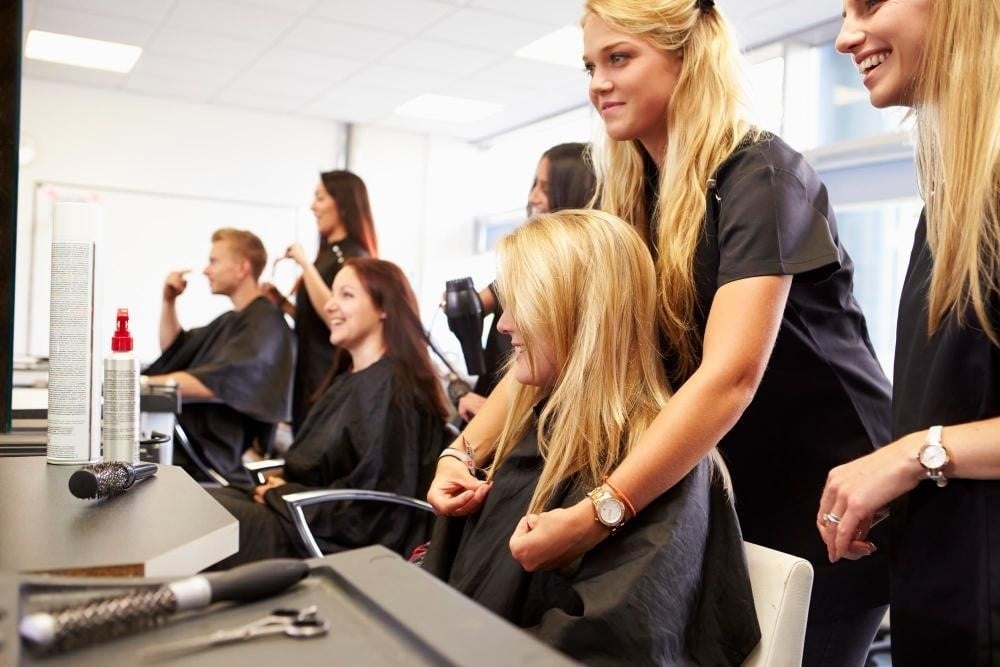
The right school doesn’t just teach you to cut hair. It builds your technical foundation, develops your eye for shape and balance, and prepares you for the reality of salon work. Not all programs do this. Let’s talk about what actually separates quality training from expensive mistakes. Here are the key characteristics that set top beauty schools for hair styling and grooming apart.
Real Client Contact Separates Good Programs From Terrible Ones
You can watch a thousand demonstrations. You can practice on mannequins until your hands cramp. None of that compares to working on real people with real expectations.
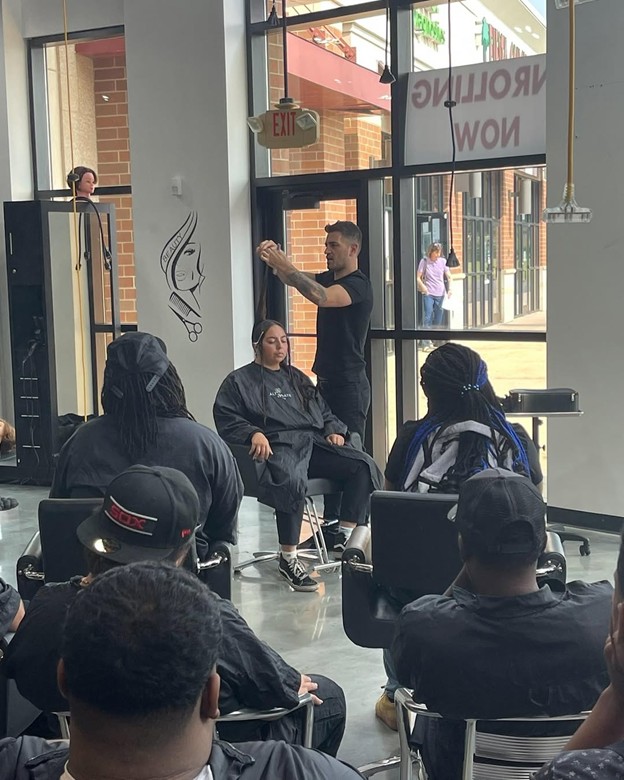
Quality hairstyle programs put you in front of clients early and often. Not just your classmates trading services. Actual paying clients who book appointments, have specific requests, and care deeply about results.
We structure our training at Cosmetology & Spa Academy around maximum client interaction because that’s where learning accelerates. Working on your friend who’ll forgive mistakes is completely different from styling someone who’s paying for professional service.
Different hair textures, densities, growth patterns, and face shapes walk through the door daily. You learn to assess quickly and adapt your technique. That skill only develops through repetition with diverse clients.
Programs that keep students isolated in classrooms for months before allowing client contact are wasting your time and money. The learning curve is steepest when you’re actually performing services under professional supervision.
Ask schools directly: When do students start working on real clients? How many client services does the average student complete before graduation? What’s the supervision ratio during client work?

Instructor Experience Matters More Than School Reputation
A school’s reputation means nothing if instructors haven’t worked in real salons for years. Our instructors have extensive salon experience. They’ve worked busy floors, built clientele, dealt with walk-ins demanding fixes for bad home color jobs, and navigated the business side of hair styling.
That experience translates directly to better teaching. They know which techniques actually work under time pressure. They understand common mistakes before you make them. They teach you salon reality, not textbook theory.
When visiting schools, ask about instructor backgrounds. How long did they work in salons? Do they still take clients? Can they show you their work? Instructors should be artists who can demonstrate, not just teachers who can lecture. The difference is enormous.
Technical Curriculum Depth Reveals Program Quality
Basic cutting, coloring, and styling—every program teaches these. The depth of that teaching varies wildly. Quality programs break down each skill into progressive levels. You’re not just learning “how to cut hair.” You’re learning foundational cuts, then building to advanced techniques, then mastering customization for different clients.
We teach classic cuts—bob, layers, graduation—as foundations. Then we build to texturizing, point cutting, slide cutting, and razor techniques. Students understand why they’re choosing each technique for specific results.
Color education follows the same progression. Color theory and formulation come first. Then single-process applications. Then highlights, balayage, color corrections, and advanced dimensional work.
Programs that rush through fundamentals to get to trendy techniques produce stylists with massive skill gaps. You can’t do beautiful balayage if you don’t understand tone, placement, and saturation fundamentally.
Check program outlines carefully. How many hours are devoted to cutting versus coloring versus styling? Is there progression from basic to advanced, or is everything taught simultaneously? Depth matters more than breadth. Better to master core skills than dabble in everything superficially.

Men’s Grooming Gets Overlooked in Many Programs
Barber skills and men’s grooming represent huge market segments that many cosmetology programs barely address. We include clipper work, fade techniques, beard grooming, and traditional barbering skills in our curriculum because our graduates work with male clients constantly. Ignoring half the population makes no sense.
The men’s grooming market has exploded. Guys are spending serious money on cuts, color, skincare, and grooming services. Stylists who can’t handle fades, tapers, and classic men’s cuts are losing income.
Quality programs recognize this and include comprehensive men’s cutting and styling training. You should graduate comfortable working on any client, regardless of gender or style preference.
Ask schools specifically about men’s grooming education. How many hours? Do students practice on male clients? Are clipper techniques taught thoroughly? If the answer is “we cover it briefly,” that’s inadequate preparation.
👉 Interested in learning more about men’s hairstyling? Explore our barber program!
Modern Equipment and Products Reflect School Investment
Walk into a training salon and look around. Are students using professional-grade tools or cheap alternatives? Quality shears, professional blow dryers, modern color lines, and well-maintained stations aren’t optional. These tools are what you’ll use professionally. Learning on inferior equipment creates a difficult transition when you start working.
We’ve invested in professional equipment at all four locations because we refuse to train students on substandard tools. The muscle memory you develop needs to transfer directly to salon work.
Check the products available too. Are students mixing with professional color lines or using budget alternatives? Do they have access to various styling products for different hair types?
Schools that cheap out on tools and products are showing you their priorities. They’re not focused on your success.
👉 Want to explore our campuses and facilities? Book a tour!
State Board Pass Rates Tell You Everything
Every state requires cosmetologists to pass licensing exams. Schools with consistently low pass rates have serious curriculum problems. These statistics are public through state cosmetology boards. Check both written and practical exam pass rates for any school you’re considering.
Pass rates below 80% suggest inadequate preparation. The best programs prepare students so thoroughly that licensing exams feel manageable, not overwhelming. We build state board preparation throughout training, not just the final weeks.
Students practice on state board mannequins, understand exam expectations, and review theoretical knowledge continuously. Our graduates walk into licensing exams confident because they’ve been preparing since day one.
👉 Learn more about how to get your barber license in Illinois thanks to our detailed guide!
The Questions That Reveal Truth
Tour multiple schools before deciding. Ask specific questions and pay attention to how comfortably they’re answered.
What’s your student-to-instructor ratio during practical work? How long is beauty school for hair? How many client services do students complete on average? Can I speak with recent graduates? What’s your job placement rate six months post-graduation? How do you handle students who struggle with specific skills?
Good schools answer confidently and offer evidence. They’ll connect you with graduates. They’ll show you placement statistics. They’ll explain exactly how they support struggling students.
Schools that dodge questions, pressure quick decisions, or provide only vague responses are showing you who they are. Believe them.
We’re Transparent About What Training Involves
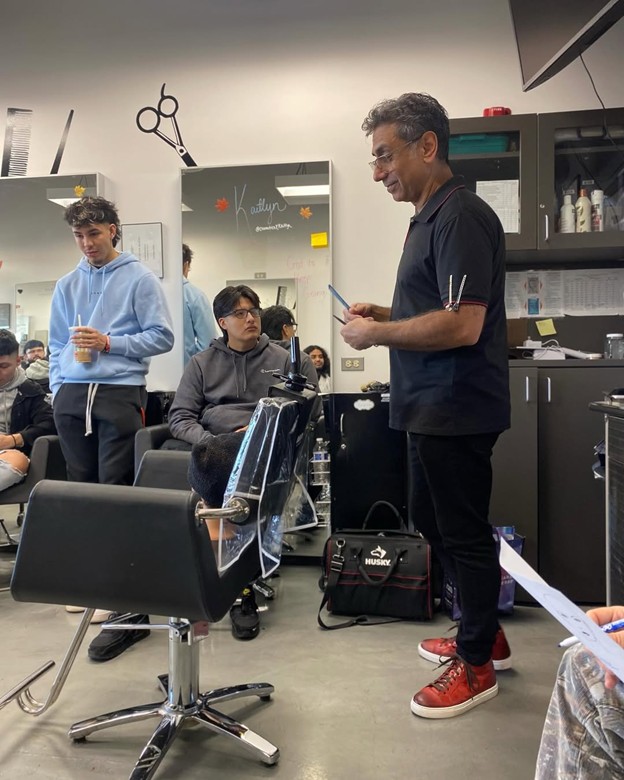
At Cosmetology & Spa Academy, we’re upfront about hairstyle training course requirements, challenges, and outcomes.
Hair styling training is demanding. Long hours on your feet. Constant learning. Technical skills that require significant practice. Not everyone completes programs, and not everyone who completes programs thrives professionally.
But for people who love this work and commit to learning properly, it’s an incredibly rewarding career with strong income potential and creative satisfaction.
We provide quality training with experienced instructors, professional equipment, extensive client contact, and comprehensive business education. We prepare students for real salon work, not just licensing exams.
Contact us or visit any of our locations and see our training salons in action. Talk with instructors and current students. Ask every question you have!