People still ask for hair removal services at spas and salons the most. Customers want skin that is smooth and hair-free for weeks, not days. As an aesthetician, you need to know how to use a variety of hair removal methods to meet the needs of different clients. Waxing and sugaring are the two most common ways that professionals remove hair. A lot of clients want to know which method they should use. Your ability to teach them shows that you are professional and builds trust. Let’s get started!
Understanding Waxing Fundamentals
Waxing has been the industry standard for decades. Nearly every spa and salon offers waxing services, making it essential knowledge for aspiring estheticians.
How Waxing Works
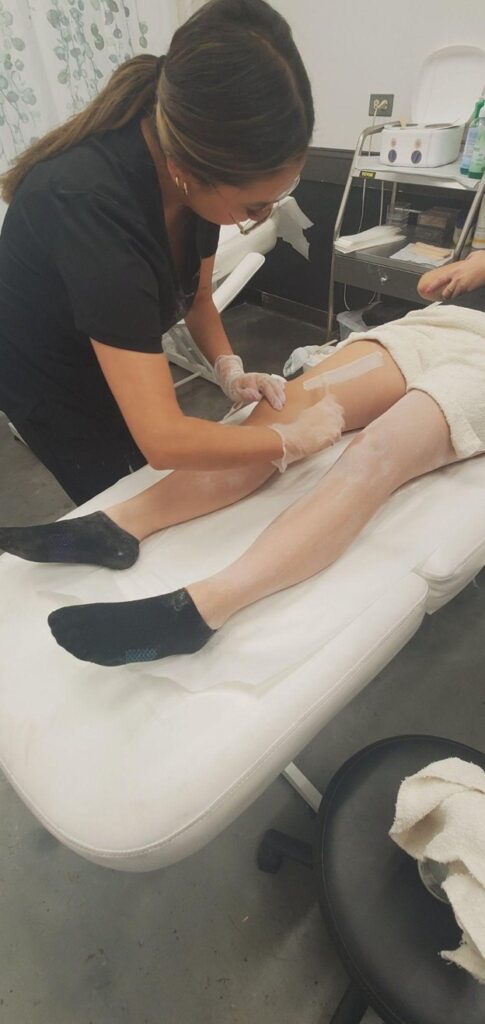
You use heated resin-based products on your skin in the direction of hair growth when you wax. As the wax cools, it sticks to both the hair and the skin. Aestheticians then quickly remove the wax against the direction of hair growth using cloth strips or the wax itself for hard wax.
There are two main types of wax: hard wax and soft wax. To use soft wax, you need cloth strips, and it works well on big areas. Hard wax hardens on its own, so you don’t need strips. This makes it safer for sensitive areas like the face and bikini line.
This process pulls hair out of the follicle, which stops it from growing. Results usually last three to six weeks, but this depends on how quickly your hair grows.
Advantages of Waxing Services
Waxing gives you results right away that are very noticeable. Customers leave with smooth skin that doesn’t have any hair for weeks. Because it works so well, a lot of people use it to get ready for vacations and special events.
The method works on almost all parts of the body. This service is a cornerstone because it can do everything from shaping eyebrows to waxing full legs. Experienced aestheticians can quickly wax large areas, which lets you serve more clients each day.
Problems with waxing
Pain is still the main reason people don’t like waxing. It can be painful to take off wax because it sticks to the top layer of skin. Some clients can’t handle the feeling in sensitive areas, which makes them very uncomfortable.
Some clients have skin reactions. After waxing, it’s normal for the skin to be red, irritated, and have temporary bumps. Clients with skin that is very sensitive may have stronger reactions.
The method only works on hair that is short. For wax to work well, hair must be at least a quarter inch long. This means that clients have to wait for their hair to grow out between treatments.

Exploring Sugaring Techniques
Sugaring has been around for thousands of years, going back to ancient Egypt and Persia. This old-fashioned method has become more popular in recent years as clients look for gentler options to regular waxing.
How Sugaring Works
Sugar, water, and lemon juice are the only things in sugaring paste. Clients who like natural beauty treatments like the paste because it is simple.
Aestheticians heat the paste up to body temperature, which makes it cooler than wax. They put it on against the direction of hair growth and then take it off in the direction of hair growth, which is the opposite of waxing. This makes it less likely to break and hurt.
The sugar paste only sticks to hair and dead skin, not living skin cells. This basic difference makes the experience less harsh.
Benefits of Sugaring
The best thing about sugaring is that it hurts less. Because paste doesn’t stick to living skin cells, it hurts less to remove than waxing. People who can’t handle a lot of pain often choose sugaring.
The list of natural ingredients is good for people with sensitive skin or allergies. The paste is safe for most skin types and doesn’t cause allergies. People who are worried about chemicals like that the product is simple.
Sugaring works on hair that is shorter than what waxing needs. Cutting the time it takes for hair to grow out in half means that hair only needs to be one-eighth of an inch long. Cleaning up is easy because sugar paste dissolves in water.
Limitations of Sugaring
Availability is still the biggest problem with sugaring. There are fewer aestheticians who do sugaring than waxing, which makes it harder for clients to get it. This gives newly trained aestheticians who want to learn the technique a chance.
It takes longer to learn than waxing. You need to know how to use your hands in a certain way and control the consistency of the paste when you sugar. To get really good at these skills, you have to practise a lot.
Usually, sugaring takes longer than waxing. Because of the careful application and removal process, appointments take longer, which limits how many clients you can see each day.
Comparing Client Suitability
Different methods work better for different clients. Waxing is good for people with normal to less-sensitive skin who can handle some pain. Waxing is quick, which is good for people who need appointments right away.
People with sensitive skin, allergies, or a low pain threshold often choose sugaring. People who have had reactions to regular wax will find the gentler process to be better. People who like natural treatments like sugaring because it only has a few simple ingredients.
Contraindications and Safety
You need to know that both techniques have reasons why they shouldn’t be used. In esthetics practice, the safety of clients is always the most important thing.
Don’t wax or sugar skin that is sunburnt, irritated, or broken. Never work on skin that has an active infection, rash, or open wound. Clients who use retinoids, some acne medications, or other prescription topicals may need to stop waxing or stop taking their medications for a short time.
You have to wait a certain amount of time after getting a chemical peel or other cosmetic procedure before you can remove hair. People with diabetes or a weak immune system need to be extra careful and may need to get permission from a doctor.
Building Your Hair Removal Expertise
Professional training provides essential foundations in hair removal safety and technique. Your esthetics education covers anatomy, sanitation, product chemistry, and proper application methods.
Practice extensively on diverse hair and skin types during training. Hands-on experience builds the confidence and skill that clients trust. Consider additional certifications after licensure to expand your service offerings and keep skills current.
Career Implications for Estheticians
Your hair removal skills directly impact earning potential. These services generate consistent income because clients need regular maintenance.
Mastering both waxing and sugaring makes you more marketable. Employers value versatile estheticians who accommodate various client needs. Understanding different beauty career specializations helps you identify your ideal path.
Choosing Your Education Path
Quality esthetics training covers both waxing and sugaring fundamentals. Selecting the right beauty school determines your skill level and career readiness.
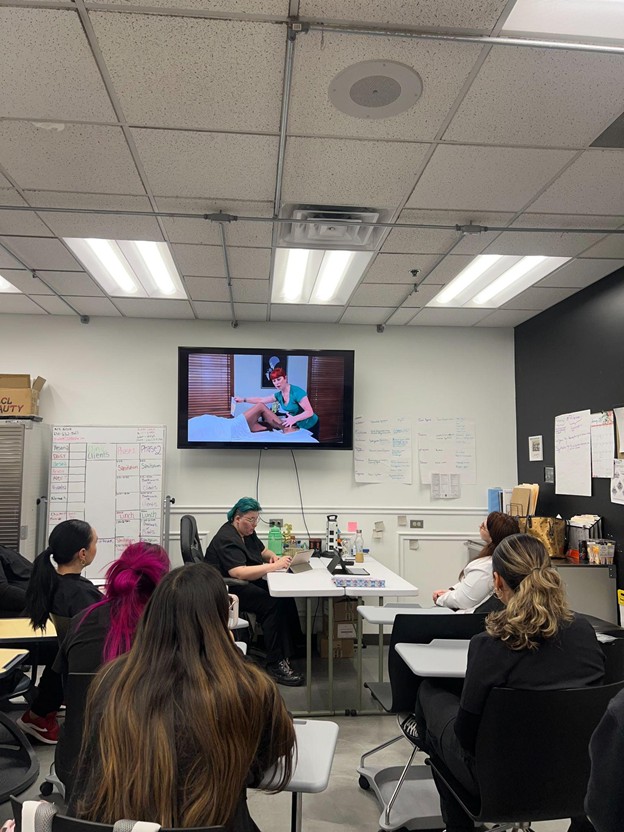
Cosmetology & Spa Academy offers comprehensive esthetics training at our Crystal Lake, Elgin, Rockford, and Schaumburg locations. Want to see our facilities up close? Book a tour!
Our experienced instructors teach current techniques using professional-grade products. Students practice extensively in our student clinics, building skills before graduation.
We emphasize proper sanitation, client consultation, and technical proficiency. Our curriculum prepares you for Illinois state board licensure and immediate employment.
Making Your Decision
Both sugaring and waxing deserve places in your professional skill set. Neither is universally superior—each excels in different situations.
Master waxing first as it’s more widely practiced and requested. Once comfortable with waxing, add sugaring to broaden your capabilities. Client education sets professionals apart—explain both options and your recommendation based on each situation.
Ready to start your esthetics career? Contact Cosmetology & Spa Academy at 815-455-5900 or email info@csa.edu to learn about our esthetics program. Our comprehensive training prepares you for all aspects of esthetic practice, including hair removal techniques.