Rapid weight loss changes more than just your body—and not always in ways people anticipate. Over the past couple of years, “Ozempic face” has gone from a niche social media observation to one of the most common concerns we hear about at spas and medical esthetics practices. Clients losing significant weight through GLP-1 medications like Ozempic and Wegovy are showing up with hollowed cheeks, deeper lines, and an overall aged appearance they weren’t expecting and they’re looking to estheticians for answers.
Understanding the physiology behind it, knowing which treatments actually help, and being honest about what skincare can and can’t do is what separates professionals who build lasting client trust from those who overpromise and underdeliver.
What Is Ozempic Face?
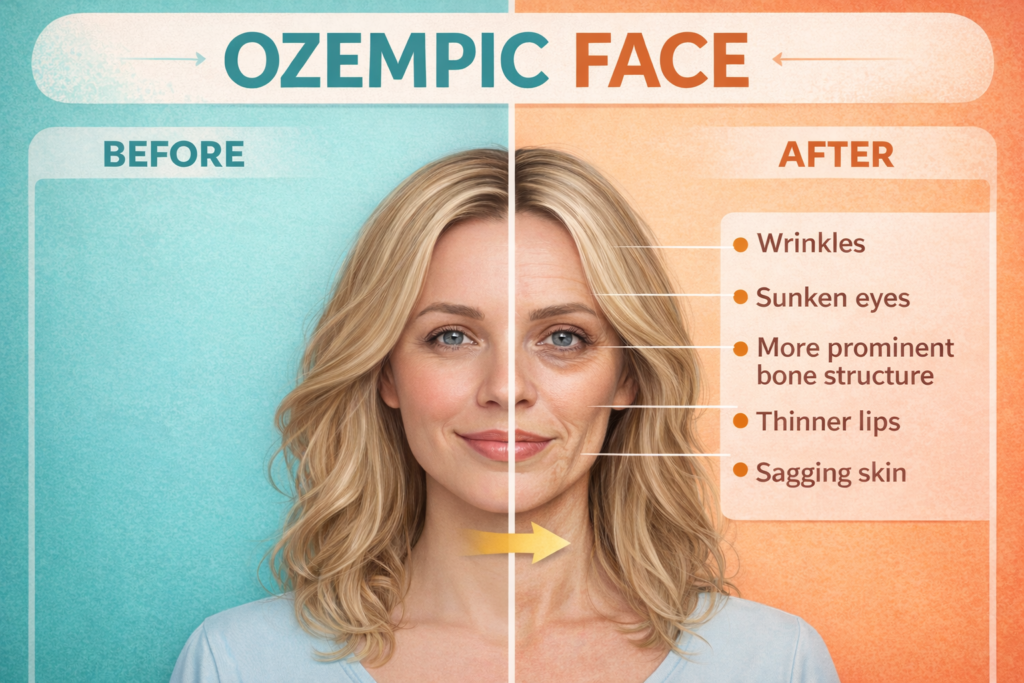
Ozempic face describes the facial volume loss and accelerated aging appearance that comes with rapid, significant weight loss, particularly the kind driven by GLP-1 receptor agonists.
These medications work by suppressing appetite and slowing digestion, which can produce dramatic results. Losses of 15-20% of total body weight over several months aren’t unusual.
That’s genuinely meaningful for metabolic health, cardiovascular risk, and quality of life. But the body doesn’t selectively burn fat from convenient places. The face loses volume right along with everything else.
The term spread fast on social media because the effect was so visible and so common. People who felt the best they had in years were looking in the mirror and seeing someone who looked exhausted and older. It’s not exclusive to these medications, any significant rapid weight loss can cause it, but the scale of GLP-1 adoption made it impossible to ignore.
Understanding the underlying cause matters because it shapes everything about how we treat these clients and communicate with them.
What Does Ozempic Face Look Like?
The presentation varies based on how much weight someone loses, how quickly, their age, and their skin’s baseline elasticity. However, there are consistent patterns.
Cheeks become noticeably hollow. Temples sink inward. The under-eye area deepens, creating that persistently tired look regardless of how much sleep someone’s getting. Nasolabial folds (the creases running from the nose to the corners of the mouth) deepen substantially.
Marionette lines appear or worsen. The jawline softens and sags without the underlying fat to support it. The neck develops loose, crepey texture.
Skin often looks thinner overall, more translucent, and less resilient. Fine lines that were barely visible before become pronounced. Clients frequently describe it as their face looking deflated, structurally intact but emptied out.
Age plays a significant role in severity. Younger clients with good skin elasticity tend to fare better, though they’re not immune. Older clients, or those with existing sun damage, often see more dramatic changes because their skin has already lost some of its natural rebound capacity. How fast the weight comes off matters too. Slower loss gives skin more time to adapt.
How to Prevent Ozempic Face
Prevention is genuinely more effective than trying to reverse significant volume loss after the fact—but it requires getting ahead of the process, which most clients don’t do. The single most impactful factor is pace. Losing one to two pounds per week gives skin a reasonable chance to contract gradually as volume decreases.
Losing five or more pounds weekly almost guarantees the skin won’t keep up. For clients who have the option, working with their prescribing physician to find a lower dose or a slower titration schedule can make a meaningful difference in facial outcome.
Facial exercises during weight loss won’t prevent fat loss, but maintaining underlying muscle tone provides at least some structural support as fat diminishes. It’s not a substitute for other interventions, but it’s worth recommending.
Starting professional skin treatments early—before changes become visible—is far more effective than waiting until the damage is done. Anything that builds collagen and improves skin quality gives the face a better foundation to work from. These are among the advanced facial treatments estheticians can deploy proactively for clients undergoing body transformation.
Beyond that: hydration matters, protein intake matters, and sun protection matters. None of these are dramatic interventions, but they collectively support skin health during a period of significant physical stress.
That said, if someone is losing 75 pounds, some degree of facial volume loss is going to happen regardless of what they do. The goal is minimizing it, not pretending it’s fully preventable.
Understanding Facial Fat Pads and Volume Loss
The face isn’t just skin over bone. It has a layered architecture of fat compartments—distinct pads in the cheeks, temples, under-eyes, and along the jawline—that give it three-dimensional structure and youthful contour.
During rapid significant weight loss, those compartments deflate. The skin above them doesn’t always follow suit, particularly in older clients or those with compromised elasticity. That mismatch between reduced volume and skin that hasn’t contracted is what creates the characteristic aged, hollow appearance.
For younger clients with good elasticity, some natural skin tightening does occur over 12 to 18 months following weight loss stabilization. For clients who’ve already lost elasticity through age, sun exposure, or smoking, that natural adaptation is limited or absent. The skin simply doesn’t have the rebound capacity.
This physiological reality is important to understand because it shapes the conversation we have with clients about what’s achievable. Esthetician treatments can do meaningful things for skin quality—but they’re working with skin, not replacing structure. For estheticians interested in expanding into clinical settings where these cases are most common, our overview of how to become a medical esthetician outlines that advanced career pathway.
What Estheticians Can Address vs What Requires Medical Referral
Being clear about scope of practice isn’t a limitation—it’s how we protect clients and maintain credibility.
What we can genuinely do: improve skin quality, stimulate collagen production, enhance hydration, refine texture, and provide treatments that make the skin look and function better. Microcurrent therapy, LED light therapy, professional-grade chemical peels, lymphatic drainage, and microneedling all have a legitimate place in managing how Ozempic face presents.
Staying current on the best professional-grade options means knowing your top skincare brands for cosmetology so you can confidently recommend products that complement in-clinic treatments.
What we can’t do: replace lost volume, significantly reverse severe skin laxity, or produce structural changes. Clients who’ve lost substantial facial volume may need dermal fillers for ozempic face, and clients with significant skin laxity may need lifting procedures or surgical intervention. Those are medical services, and our role includes recognizing when to refer.
Clients actually respect this honesty. Telling someone clearly that their concern needs a different level of care—and pointing them toward the right provider—builds more trust than continuing treatments that won’t deliver what they’re hoping for.
Safe and Effective Esthetic Treatments for Ozempic Face
When expectations are calibrated correctly, several esthetic treatments can make a real difference for clients experiencing facial changes from weight loss.
Microcurrent facials
Microcurrent facials stimulate facial muscles with low-level electrical current, providing temporary toning and mild lifting effects. Results are cumulative with regular treatment—typically twice weekly initially, then monthly for maintenance—and work best for mild to moderate laxity. The effects aren’t permanent, but consistent maintenance produces visible improvement over time.
LED light therapy
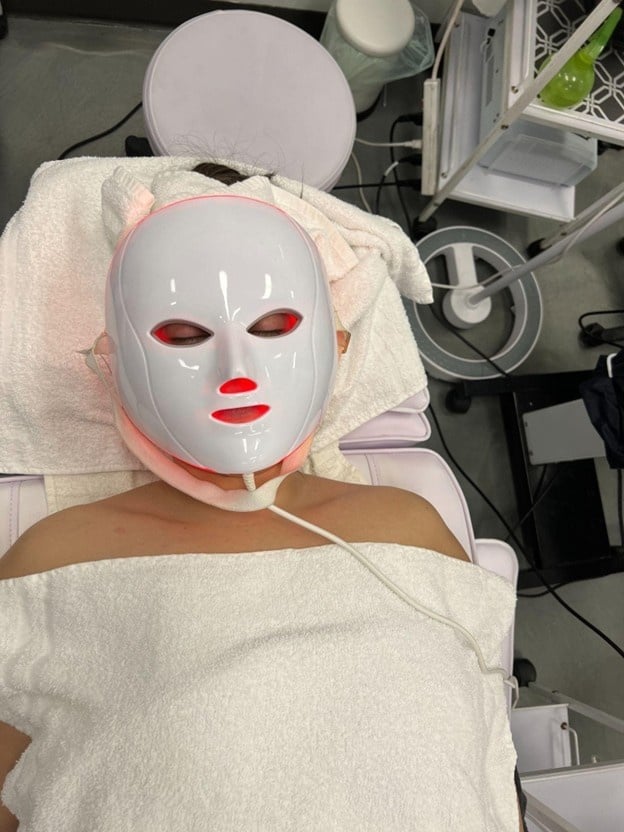
LED light therapy using red and near-infrared wavelengths supports fibroblast activity and promotes collagen and elastin production. Eight to twelve treatments produces the most visible results, with ongoing biweekly sessions for maintenance. It won’t replace volume, but healthier, firmer skin looks better regardless.
Chemical peels
Chemical peels improve texture, address hyperpigmentation, and stimulate cell turnover. For volume-depleted skin, gentler acids like lactic and mandelic are the right choice—they hydrate while improving texture without further compromising already thin, fragile skin.
Lymphatic drainage massage
Lymphatic drainage massage helps reduce fluid retention and puffiness that can exaggerate the gaunt appearance. The results are temporary but immediate, and clients often notice a meaningful difference the same day.
Microneedling
Microneedling with growth factors or hyaluronic acid serums is one of our more effective tools for genuine skin quality improvement over time. The controlled micro-injury response stimulates new collagen and elastin production over several months of consistent treatment.
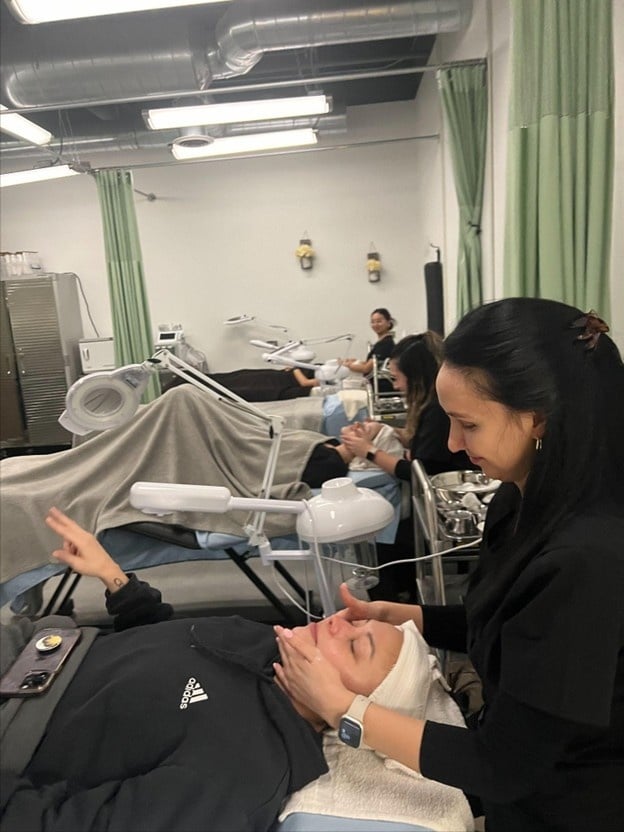
Professional Skincare Products Supporting Skin Health
Home care is what sustains treatment results between appointments, and it matters more for volume-depleted skin than almost any other skin condition.
Retinoids are the foundation. Consistent use of professional-strength retinol—or prescription tretinoin for appropriate candidates—produces measurable improvements in skin firmness, texture, and tone over several months. There’s no shortcut here; the results come from sustained use.
Peptide serums containing ingredients like matrixyl, argireline, or copper peptides signal skin cells to produce more collagen, elastin, and hyaluronic acid. They won’t reverse structural volume loss, but over time they meaningfully improve skin quality.
Growth factor products—those containing EGF, TGF-beta, or similar actives—support ongoing skin repair and collagen synthesis. These work particularly well alongside in-office microneedling.
Hyaluronic acid across multiple molecular weights provides layered hydration. Well-hydrated skin genuinely looks fuller and healthier, even without actual volume increase. Recommending a good HA serum is one of the simplest high-impact things we can do for these clients.
Barrier-supporting moisturizers with ceramides, fatty acids, and cholesterol help skin stay resilient during what is, physiologically, a demanding period of change. Compromised barrier function compounds every other skin concern—keeping it intact matters.
Setting Realistic Expectations
These clients come to us in a complicated emotional place. They worked hard, achieved something meaningful, and now they’re looking at a face that feels like a consequence rather than a reward. That frustration is real and deserves acknowledgment, not just a treatment menu.
The most important thing we can do in the first appointment is be honest. Esthetic treatments improve skin quality—texture, firmness, hydration, resilience. They don’t replace lost volume or lift severely lax skin. Clients who understand this clearly from the beginning make better decisions, stick with treatment plans longer, and end up more satisfied.
Timelines matter too. Collagen production takes months. Meaningful visible improvement from most esthetic treatments happens at the three-to-six month mark with consistent treatment and home care. Clients expecting to see results in two weeks will be disappointed no matter how good the treatment is.
When medical intervention is what they actually need, say so directly and refer them to someone qualified. This is one of many reasons choosing the right beauty school matters—programs that teach scope of practice and ethics prepare you to handle these situations professionally and confidently.
Curious about what the esthetician path looks like from enrollment to licensure? Our complete guide on esthetician license requirements in Chicago and Illinois covers every step.
Call 815-455-5900 or email info@csa.edu to learn more about our programs and how we prepare students for careers that are genuinely built for where the industry is heading.