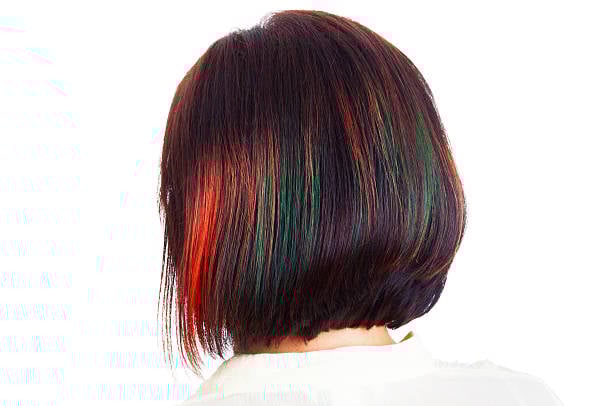
Have you ever looked at a puddle after rain and noticed how the surface shimmers with purples, greens, and blues all at once? That’s exactly the vibe behind one of the most stunning hair color trends to hit the beauty world — oil slick hair. And the best part? It was basically made for brunettes.
If you’ve ever felt like bold, vivid hair colors weren’t really designed for darker hair, oil slick hair is here to change your mind. This technique doesn’t fight your natural dark base — it works with it to create something that looks almost otherworldly.
Let’s break down everything you need to know: what it is, why it works, how it’s done, and why clients keep coming back for it.
What Is Oil Slick Hair?
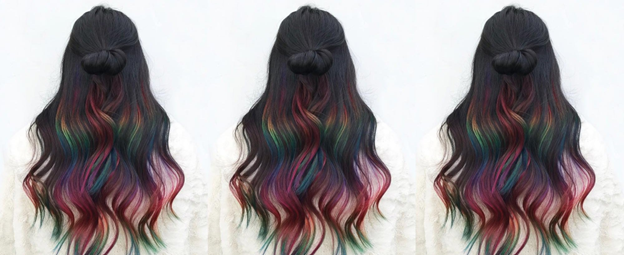
Oil slick hair is a coloring technique that layers deep, cool-toned fashion colors — primarily dark purples, greens, and blues — over naturally dark or pre-lightened brunette hair. The result is an iridescent, multidimensional effect that mimics the look of gasoline or oil on a wet surface: shifting, shimmering, and almost holographic depending on the light.
The technique was originally developed by celebrity colorist Aura Friedman, who was inspired by the visual of oil on rain-soaked pavement. By stacking dark purple and dark green tones on top of each other, she discovered she could recreate that same iridescent quality in hair — a blend of black, gray, emerald, violet, and navy that seems to shift as you move.
What makes it different from other vivid color techniques is that it’s designed specifically for darker hair. While pastels and neons often require lifting brunette hair to a very light blonde base (which can take multiple sessions and cause significant damage), oil slick hair colors are rich and deep enough to show up beautifully on hair that’s only been lightened to a medium level.
Why Oil Slick Hair Works So Well on Brunettes
Vivid fashion colors like pastels rely on an extremely light, near-white canvas to pop the way they’re supposed to. Achieving that on dark hair means aggressive bleaching — multiple rounds of it — which takes time, costs more, and puts serious stress on the hair’s structure. For many brunettes, the journey to pastel pink or neon yellow simply isn’t realistic without compromising the health of their hair.
Oil slick colors are different. The deep, jewel-toned hues — dark violet, teal, forest green, navy, indigo — are pigment-rich enough to show beautifully on hair that’s been lifted to a level 7 or so. That’s a warm amber-brown, not a pale yellow. The dark base actually adds to the effect, giving the colors more depth and making the iridescent shift more dramatic.
The result looks intentional and sophisticated rather than washed-out or muddy. The dark root area blends naturally into the colored sections, so even as the color fades or grows out, it still looks polished.
The Two Biggest Benefits of Oil Slick Hair
1. Less Bleach, Healthier Hair
Heavy lifting strips the hair of its natural proteins and moisture, leaving it prone to breakage and dryness. The oil slick technique sidesteps a lot of that damage by requiring only a moderate lift — enough to let the colors show up, but not so much that the hair is compromised.
In many cases, the entire look can be achieved in a single salon visit. That’s a significant difference compared to techniques that require pre-lightening across multiple sessions. Clients walk out with vivid, head-turning color and hair that still feels good.
2. The Color Lasts Longer
Pastel shades fade quickly because they rely on a very small amount of pigment on a light base. Once that pigment washes out — which can happen in as little as three to four weeks — you’re left with something faded and uneven. Maintaining pastels usually means frequent salon visits, which adds up fast.
Oil slick colors are much more pigment-dense, and because the base is already dark, the fading process is gradual and forgiving. Most clients can maintain this look with standard six to eight week appointments. That’s better for their hair, better for their schedule, and easier on their wallet.
How to Achieve Oil Slick Hair: Step-by-Step
Step 1: Assess the Hair and Pre-Lighten
Start with a thorough consultation. Look at the client’s natural level, the condition of their hair, and their goals. Oil slick hair dye works best when the mid-lengths and ends are lifted to around a level 7 — a warm golden brown — while the roots are kept darker for a natural shadow effect.
Use a combination of balayage and baby lights from mid-shaft to ends. Use a developer between 7 and 20 volume depending on the hair’s starting point. The goal is a warm, amber blonde — not a pale yellow. You need just enough lift for the cool tones to read clearly.
After rinsing the lightener, skip the conditioner. You want the cuticle slightly open so the fashion colors can penetrate and bond more effectively. Towel dry and blow dry until about 80% dry before moving on.
Understanding hair texture and porosity matters here — finer hair may lift faster and require less developer volume, while coarser hair may need more processing time.
Step 2: Choose Your Color Palette
Classic oil slick palettes include combinations of deep teal, dark indigo, blue-violet, forest green, and black-tinted purple. The key is to stay in the cool, jewel-toned family. Everything should feel like it belongs in that rain puddle.
A solid starting palette:
- A deep teal or peacock blue
- A dark indigo or midnight blue
- A rich blue-violet or dark purple
- Optional: a touch of eggplant to add warmth within the cool range
Warm colors like reds and oranges will break the illusion, so keep the palette disciplined.
Step 3: Apply the Fashion Colors
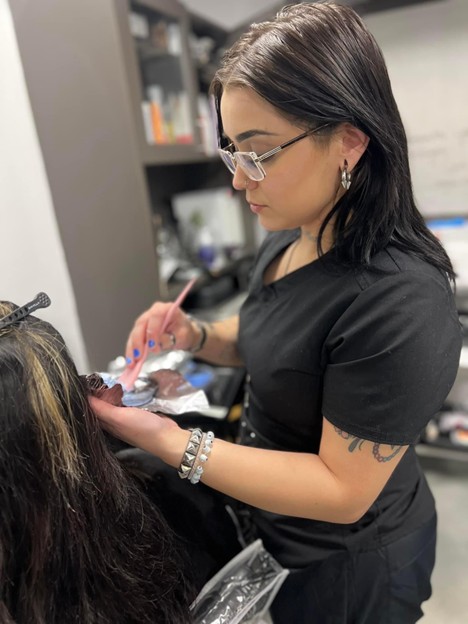
Divide the hair into four quadrants. Working one section at a time, take a parting and apply your first color from the base of the pre-lightened area down to the mid-strand. Then apply a second color from the mid-strand to the ends, blending the two with your fingers or a soft blur brush where they meet.
Lay each completed parting flat on a foil before moving to the next. This allows the colors to develop without transferring to each other, and it speeds up the process.
As you move through the head, alternate which color goes at the top and which goes at the ends. This variation is what creates the shifting, iridescent quality when the hair moves — no two sections look exactly the same, but the overall palette stays cohesive.
There’s no rigid formula here. The beauty of this technique is that it rewards creative instincts. Every result will be slightly different, and that’s completely by design.
Step 4: Process, Rinse, and Finish
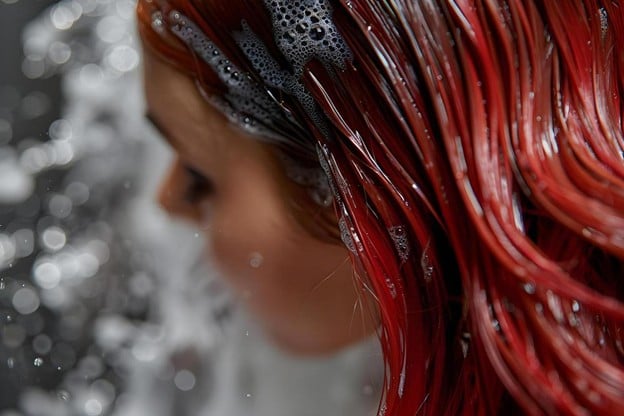
Allow the fashion colors to process according to the manufacturer’s instructions, typically 20 to 35 minutes. Rinse in cool to cold water — cold water helps seal the cuticle and lock in the pigment, extending the life of the color significantly. Finish with a gentle color-safe shampoo and a hydrating conditioner.
Caring for Oil Slick Hair at Home
The conversation doesn’t end at the salon chair. Setting clients up with the right routine is just as important as the application itself.
Rinse in cool or cold water. Hot water opens the cuticle and accelerates color fade. This is especially important in the first few washes after a fresh service.
Use a color-extending shampoo and conditioner. Sulfate-free formulas designed for color-treated hair cleanse gently without stripping the pigment.
Deep condition regularly. A weekly or biweekly mask will keep the hair healthy and the oil slick color hair vibrant.
Limit heat styling when possible. When heat is necessary, always use a heat protectant.
Plan for six to eight week appointments. Unlike pastels, oil slick hair holds up well with standard color intervals.
Who Is Oil Slick Hair Best For?
This look works for a wide range of clients. It’s particularly well-suited for:
- Natural brunettes who want vivid color without heavy bleaching
- Clients with previously colored dark hair who want something dramatic without starting from scratch
- People who want low-maintenance color that doesn’t require constant salon visits
- Anyone who’s been told bold colors “won’t work” on their dark hair
The technique is also versatile by length. It looks incredible on long hair where the colors have room to cascade and shift, but it works beautifully on medium lengths too. On shorter cuts, the effect is more concentrated and bold.
The oil slick hair trend is incredibly versatile—you can achieve looks like subtle oil slick hair, sunset oil slick hair, peacock oil slick hair, or even bold red oil slick hair, depending on the vibe you want to create.
Oil Slick Hair as a Career Skill
From a professional standpoint, mastering oil slick hair is a smart move. It attracts a specific type of client — someone who wants something artistic, personalized, and unique. These clients tend to be loyal, they share their results on social media, and they refer friends.
Building a portfolio that includes complex, dimensional color work signals that you’re serious about your craft. It’s the kind of work that gets you noticed. Oil slick hair photographs beautifully too — the iridescent shift that makes it so special in person translates just as strikingly in photos, making it ideal content for Instagram and TikTok.
If you want to learn how to document and present this kind of work effectively, our guide on how to build a cosmetology portfolio is a good place to start.
Thinking About Turning This Into a Career?
If techniques like this genuinely excite you — the artistry, the chemistry, the client relationship — that’s a strong signal that cosmetology might be exactly where you belong.
At Cosmetology & Spa Academy in Illinois, we train students on both foundational skills and the advanced techniques that today’s clients are looking for. Color theory, balayage, fashion color application — it’s all part of our cosmetology program, taught in a hands-on environment designed to prepare you for a real career in the industry.
Want to know what that path looks like from start to finish? Read our complete guide on how to become a cosmetologist in Illinois.
Frequently Asked Questions About Oil Slick Hair
Does oil slick hair work on very dark (level 1–2) natural hair?
It can, but you’ll get the best results with some pre-lightening. Hair that’s extremely dark will show the colors, but the iridescent shift will be more subtle. Lifting to at least a level 5–6 before applying the fashion colors gives you much more visible, vibrant results.
How long does the color typically last?
With proper at-home care — cold water rinses, color-safe products, regular conditioning — most clients see their oil slick color hold well for six to eight weeks before fading noticeably. That’s significantly longer than pastels, which often fade in three to four weeks.
Can oil slick hair be done in a single salon visit?
Yes, in most cases. For clients with naturally dark hair at a level 4–5, the lightening and color application can typically be completed in one appointment. Clients with very dark or previously colored hair may need some pre-work beforehand.
Will oil slick hair damage my hair?
Because it requires only moderate lightening rather than aggressive bleaching, oil slick hair is generally much gentler than techniques that require heavy lifting. That said, any chemical service carries some impact on hair health, and regular conditioning is always recommended.
What’s the difference between oil slick hair and galaxy hair?
Both use vivid, jewel-toned fashion colors on dark hair, but there are key differences. Galaxy hair typically incorporates brighter, lighter pops of color — like lavender, electric blue, or silver — and has more contrast between sections. Oil slick hair stays darker and more muted overall, mimicking the specific iridescent sheen of oil on water.
Can this technique be done on hair that’s already been colored?
Yes, but a consultation matters. If the hair has been colored with a warm permanent dye, underlying pigment may affect how the cool tones appear. A stylist may need to adjust the approach based on the hair’s existing color history.
How often should clients come back to maintain the look?
Most clients maintain oil slick hair on a standard six to eight week schedule. The gradual fade tends to be forgiving, so there’s rarely an urgent deadline before it starts looking unkempt.
Is oil slick hair a good choice for clients who’ve never had vivid color before?
It can actually be a great entry point. Because the colors are dark and rich rather than bright and neon, the look is wearable for clients who want something bold but not overwhelming. It reads as sophisticated rather than costume-like, which makes it easier for first-timers to commit.