It can be hard to think about changing careers, especially if you’ve been in your current field for a long time. You might have always wanted to work in the beauty industry, but now you think you’ve missed your chance. What is the truth? It’s never too late to follow your heart. Are you ready to see if this path is right for you?
Why People Switch Jobs to Work in Beauty
There are many reasons why people change jobs. Some people feel like they can’t be creative when they work for a company. Some people want to have more say over their schedule and how much money they make. A lot of people just know they want to do something they really care about.
The beauty industry has things that other jobs don’t. You have the freedom to be creative, set your own hours, and work directly with clients. Every day brings new problems and chances to help people feel good about themselves and look good.
Studies show that people who work in cosmetology are very happy with their jobs. They like getting to know their clients and seeing the results of their work right away. Beauty work makes a real difference that you can see, unlike desk jobs where your impact feels abstract.
Financial stability matters too. Top-paying beauty careers in Illinois offer strong earning potential. Many professionals build six-figure incomes through a combination of services, retail sales, and building loyal client bases.
Signs You’re Ready for a Career Change
You’ll know it’s time for a change when work starts feeling more like obligation than opportunity. Maybe you dread Monday mornings or feel disconnected from your daily tasks. These feelings signal that something needs to shift.
Consider these questions. Do you spend your free time watching beauty tutorials or experimenting with makeup? Do you light up when helping friends with their hair or skincare? Do you crave work that lets you be creative and interact with people?
According to Bureau of Labor Statistics data, the average person holds 12 different jobs by age 50. Career changes are normal, not failures. Each role teaches you something valuable about what you want and what you don’t.
Life is too short to spend it unfulfilled. We dedicate roughly 90,000 hours to work over our lifetime. Investing that time in something meaningful makes a massive difference in your overall happiness and quality of life.
Your Current Skills Already Apply
You might think your background has nothing to do with beauty, but you’d be surprised. Most careers develop transferable skills that directly benefit beauty professionals. Your experience isn’t wasted—it’s an asset.
Business and Marketing Skills
If you’ve worked in sales, marketing, or business development, you’re already ahead. Beauty professionals market themselves constantly through social media, referrals, and client retention strategies. Understanding how to promote services and build a personal brand is crucial.
Financial management experience helps too. Many beauty professionals are self-employed or booth renters. Tracking expenses, managing taxes, and pricing services properly requires business savvy. Your corporate background gives you confidence in these areas.
Customer service skills translate perfectly. Any role where you’ve managed client relationships prepares you for salon work. You know how to handle difficult situations, exceed expectations, and build loyalty through exceptional service.
Creative and Technical Abilities
Artistic backgrounds mesh naturally with beauty careers. If you’ve worked in graphic design, photography, or any creative field, you already think about color theory, composition, and aesthetics. These concepts apply directly to hair coloring, makeup application, and styling.
Detail-oriented professions like nursing, accounting, or project management develop precision. Beauty work demands attention to detail—from nail art to chemical processing times. Your meticulous nature becomes your greatest strength.
Teaching or training experience prepares you for client education. Part of being a great beauty professional involves explaining techniques, recommending products, and helping clients maintain their look at home. Your communication skills make this second nature.
People Skills and Emotional Intelligence
Healthcare workers bring empathy and patient care skills. Nurses and medical professionals understand sanitation, anatomy, and client comfort. These fundamentals are essential in esthetics and cosmetology. Many of our students successfully transition to medical esthetics using this background.
Retail and hospitality veterans excel at building rapport quickly. You know how to read people, make them comfortable, and create positive experiences. These soft skills matter more than technical abilities in building a successful beauty career.
Teachers and counselors understand individual needs. You listen carefully and tailor your approach to each person. This translates beautifully to consultation skills, where understanding what clients really want makes all the difference.
The Age Diversity in Beauty School
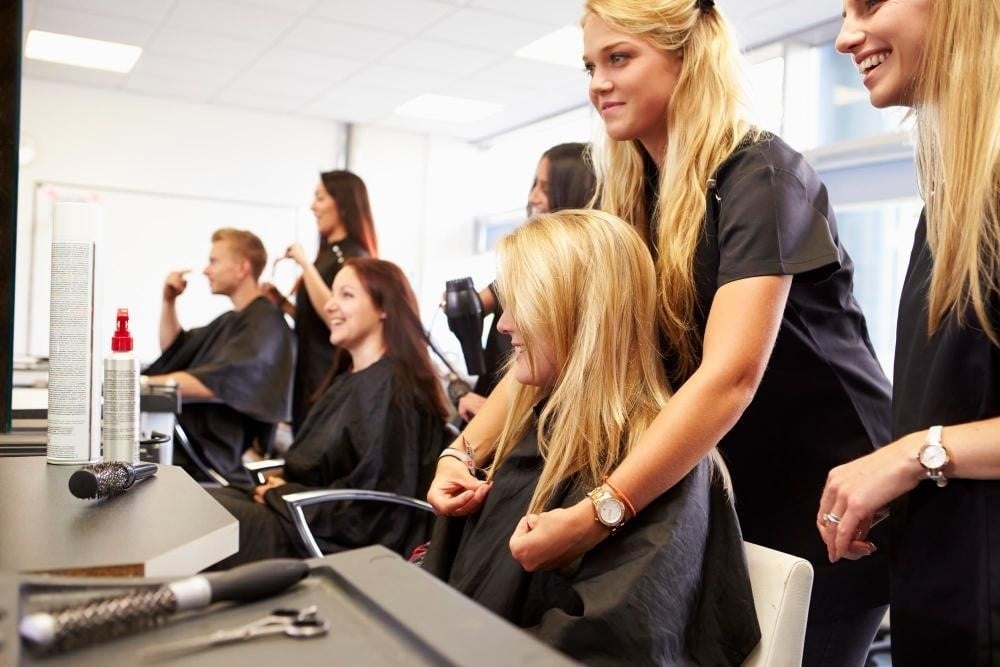
Are you worried about being the oldest person in class? You won’t be. Beauty schools draw in people of all ages, from teens to seniors. Recent data from the industry shows that the average age of salon workers is almost 40.
People who change careers bring maturity that makes the learning environment better. Younger students like how hard you work and how you see life. Your professionalism and dedication are important to your teachers. You stop being an outsider and start being a role model.
A lot of students have stories that are similar. Before they found their love for beauty, they worked in corporate America, raised families, or did other jobs. This variety makes the learning environment safe and free of judgement.
Age is also a plus when working with clients. Mature professionals often get clients who value their dependability, professionalism, and life experience.Clients trust you with their looks because you show that you are confident and capable.
Our teachers at Cosmetology & Spa Academy see this all the time. Students in their 30s and 40s often do better than younger students because they are more focused and driven. They know how important their education is and make the most of every chance to learn.
Understanding Beauty Education Options
Choosing the right beauty program depends on your interests and goals. Different paths lead to different career opportunities. Understanding your options helps you make an informed decision.
Cosmetology Programs
Cosmetology offers the broadest training, covering hair, skin, and nails. Becoming a cosmetologist in Illinois requires 1,500 hours of training. This comprehensive education opens the most career doors.
Programs typically take 9-15 months depending on your schedule. Full-time students finish faster, while part-time and evening options accommodate working professionals. We structure our curriculum to fit different lifestyles across all four of our Illinois locations.
The versatility of a cosmetology license is unmatched. You can work in salons, spas, film and theater, or start your own business. Many graduates specialize in specific areas like hair styling or color after gaining experience.
Esthetics Training
Esthetics focuses exclusively on skincare and facial treatments. Becoming an esthetician requires 750 hours of training in Illinois, making it a faster path than cosmetology.
This program suits people passionate about skincare science and wellness. You’ll learn facials, waxing, makeup application, and product knowledge. The field continues expanding with new technologies and treatment modalities.
Career changers from healthcare often gravitate toward esthetics. The science-based approach and client care aspects feel familiar. Advanced certifications in areas like oncology esthetics let you work with specialized populations.
Barbering Programs
Barbering focuses on men’s grooming, including cutting, styling, and shaving. The male grooming industry has exploded in recent years, creating strong demand for skilled barbers. Getting your barbering license in Illinois requires 1,500 hours of training.
Many career changers appreciate barbering’s straightforward, technical nature. The work emphasizes precision cutting and traditional techniques. Shop culture tends to be more casual and community-focused than traditional salons.
Barbers can earn excellent incomes, especially in urban areas. Building a loyal clientele happens quickly in barbering because men often stick with the same barber for years once they find someone they trust.
Beauty Instructor Programs
Already have a cosmetology or esthetics license? Becoming a cosmetology instructor offers a different career path. You combine industry experience with teaching to train the next generation.
This appeals to career changers who miss the mentorship aspects of their previous roles. Teachers, trainers, and managers often find instructor positions fulfilling. You stay connected to the industry while enjoying more predictable schedules.
Instructor training requires additional education beyond your initial license. However, it opens opportunities for stable employment with benefits—something less common for salon professionals.
Financial Planning for Beauty School
Money concerns stop many career changers from pursuing beauty education. Between tuition, living expenses, and time away from work, the investment feels significant. However, multiple funding options make it more accessible than you might think.
Scholarships and Grants
Numerous scholarships specifically target beauty students. Some focus on career changers, others on underserved populations. The Jeannette Rankin Women’s Scholarship Fund supports low-income women over 35 pursuing any vocational training.
Check your state’s education department for Illinois-specific funding. Local cosmetology associations often offer scholarships to students committed to working in the area. Community organizations and women’s groups may have additional resources.
Our financial aid team at Cosmetology & Spa Academy helps students identify every available scholarship. Call us at 815-455-5900 to discuss your eligibility. We’re committed to making the highest-quality training accessible to motivated students.
Federal Financial Aid
Beauty school qualifies for federal student aid if you attend an accredited institution. Complete the FAFSA to determine your eligibility for grants and loans. Federal loans typically offer better terms than private options.
Pell Grants provide funding that doesn’t require repayment. These need-based grants can cover a significant portion of tuition for eligible students. Federal work-study programs let you earn money while attending school.
Understanding the complete financial aid landscape helps you make informed decisions. Federal aid often provides more favorable interest rates and flexible repayment plans than private loans.
Flexible Scheduling Options
Part-time and evening programs let you continue working while training. This approach takes longer but reduces financial strain. You maintain income while investing in your future career.
Cosmetology & Spa Academy offers multiple schedule options across our locations. Morning, afternoon, and evening classes accommodate different work schedules. This flexibility helps career changers transition without financial crisis.
Some students work weekends or part-time in their current field while attending school full-time during the week. Others attend school part-time and maintain full-time employment. We work with you to find a schedule that fits your life.
Payment Plans and Financing
Many schools offer in-house payment plans that break tuition into manageable monthly installments. This spreads costs over time without interest charges. Private financing options provide additional flexibility if federal aid doesn’t cover everything.
Budget for supplies and equipment beyond tuition. Most programs require a professional kit with tools and products. These costs vary but typically range from a few hundred to over a thousand dollars depending on the program.
Compare total costs between schools carefully. The cheapest option isn’t always the best value. Consider factors like job placement rates, instructor experience, and available resources. Investing in quality beauty education pays dividends throughout your career.
What to Expect in Beauty School
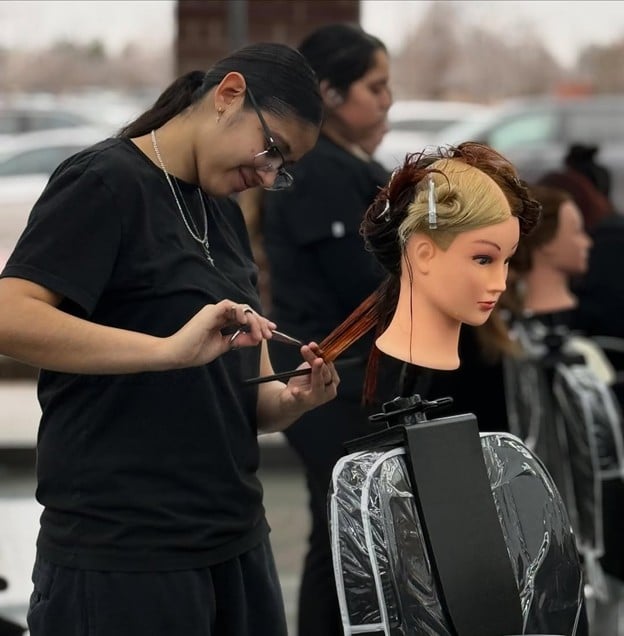
Beauty school is very different from regular college. Because the focus is on hands-on learning, you spend more time doing things than listening. People who want to change careers and learn useful skills instead of just theory will like this way of learning.
A Place to Learn by “doing”
Under the watchful eye of your instructor, you’ll work with real clients. This hands-on experience helps you gain both confidence and skills at the same time. By the time you graduate, you’ve done hundreds of services on real people.
Theory classes teach you the science behind the techniques. You will learn about the structure of hair, the anatomy of skin, sanitation rules, and state laws. This foundation makes sure you know why techniques work, not just how to do them.
The speed is fast but not too fast. Programs take a lot of information and fit it into months instead of years. Daily practice helps you remember things quickly. The hands-on approach is more interesting to most students than traditional classroom learning.
Finding a Balance: School and Responsibilities in Life
People who want to change careers often have to balance school with family, work, and other responsibilities. This needs planning and help from the people around you. Tell your family exactly what you want to do so they know how serious you are.
Managing your time becomes very important. Beauty school takes a lot of energy because you have to go to class, practise and study. A lot of students put off other commitments for a while to focus on training.
The short time frame is helpful. Beauty programs last for months, not four years. You can see the end from the beginning. This limited commitment makes the stress easier to handle.
Making Connections in Your Field
Beauty school helps you meet people who could become coworkers or clients. Your classmates become people you can work with. These kinds of relationships often lead to job offers, partnerships, and friendships that last a lifetime.
Teachers have connections in the industry and know a lot about it. They can give you references, recommend you for jobs, and introduce you to salon owners. Having good relationships with your teachers can help your career.
Guest speakers and events in your field can help you learn about different career paths. You’ll meet people who work in different fields, go to salons and spas, and learn about the duties of different jobs. This helps you figure out what you want to do after you graduate.
Career Paths After Graduation
Your beauty education opens multiple career directions. Most graduates don’t stay in traditional salon roles forever. The industry offers diverse opportunities that leverage your training in different ways.
Traditional Salon Employment
Starting in a salon provides structure and mentorship. You’ll work alongside experienced professionals who help you refine skills and build speed. Salons handle marketing, booking, and product ordering while you focus on services.
Commission-based compensation means your income grows with your skill and client base. New stylists typically earn less initially but increase earnings as they build clientele. Within a few years, experienced professionals often earn substantial incomes.
Salon employment lets you explore specializations. You might discover a passion for color, cutting, or specific techniques. Many professionals eventually find their niche and build reputations as specialists.
Jobs at spas and medical spas
Salons and spas are not the same. They have different atmospheres and services. Clients who want to relieve stress and take care of themselves are drawn to the focus on wellness and relaxation. Work at a spa is usually less rushed and more focused on the whole experience.
Medical spas offer both beauty and medical services. Aestheticians work with doctors to do more complicated things like chemical peels and laser treatments. These jobs usually pay more than regular spa jobs and need more training.
Resort and destination spas offer one-of-a-kind experiences. Some professionals travel a lot to work at high-end resorts. Others get steady jobs at spas in hotels or day spas in their area.
Renting a booth and working for yourself
Renting a chair or booth lets you work for yourself without the costs of owning a salon. You decide when to work, what services to offer, and how much to charge. This is appealing to people who want to change careers and have the freedom to start their own business.
It takes time to build a client base, but the income potential is limitless. You get to keep everything you make, except for booth rent and supplies. Professionals who do well often make a lot more money than employees who work on commission.
To be self-employed, you need more than just technical skills. You’ll take care of taxes, marketing, booking, and inventory. Your past work experience in these areas becomes very useful.

Overcoming Common Concerns
People who want to change careers have worries that younger students don’t think about. You can move forward with confidence if you deal with these issues head-on.
Beauty’s Physical Requirements Job
Beauty jobs require you to stand for long periods of time. Aestheticians and stylists work all day on their feet. This physical demand affects people who are moving from desk jobs.
Taking care of yourself and using the right technique can help reduce strain. You’ll learn how to position yourself and use ergonomics to cut down on fatigue. A lot of professionals can work comfortably into their 60s and beyond if they keep up good habits.
Compared to jobs that don’t require much movement, jobs that do require movement are better for your health. Getting up and moving around during the day helps your blood flow and energy levels. Most people who change careers say they feel better physically even though they have to stand.
Requirements for Technology and Social Media
A lot of modern beauty businesses use social media to market themselves. People who aren’t digital natives find this scary. But just like any other part of the business, you can learn how to use social media.
Start small and work your way up. You don’t have to know how to use every platform right away. A lot of successful people only work on one or two channels and do them well.
Your age can actually help you online. Older professionals often make content that is more polished and professional than younger stylists. Your life experience comes through in your writing and helps you connect with the people you want to reach.
Licensing and Testing Concerns
State board exams worry everyone, regardless of age. The cosmetology state board exam tests both practical skills and theoretical knowledge. Proper preparation ensures success.
Beauty school prepares you specifically for licensure exams. Practice tests, review sessions, and mock exams build confidence. Pass rates at quality schools typically exceed 90%.
Is beauty school hard? Students often find it challenging but manageable. The material is learnable with consistent effort. Career changers often perform well because they take their education seriously.
Ageism in the Industry
Some worry about age discrimination in hiring or client acceptance. The beauty industry actually values diversity in age and experience. Many clients specifically seek mature professionals they perceive as more reliable and skilled.
Salon owners appreciate employees with strong work ethics and life stability. Career changers often prove more dependable than younger employees. Your maturity is an asset, not a liability.
Client bases naturally reflect their service provider. Mature stylists attract mature clients. Younger professionals attract younger clients. There’s room for everyone in this industry.
Making Your Decision
Ultimately, only you can decide if changing careers makes sense. Consider your motivations, financial situation, and long-term goals. Talk it over with people who know you well and whose judgment you trust.
Is cosmetology school worth it? For career changers seeking creative, flexible work with strong income potential, the answer is often yes. The investment pays off through job satisfaction and financial returns.
Don’t let fear hold you back. Regret over chances not taken hurts more than the temporary discomfort of change. If you’re passionate about beauty and willing to work hard, you can succeed regardless of age.