Hair texture determines everything about how you style, cut, and maintain your hair. Understanding hair texture isn’t just academic knowledge. It’s the foundation of every service you’ll perform professionally. Misidentifying texture leads to wrong product choices, incorrect cutting techniques, and frustrated clients who don’t understand why their hair won’t cooperate. Let’s break down the hair texture classification system, how to identify different types accurately, and what styling approaches work best for each category.
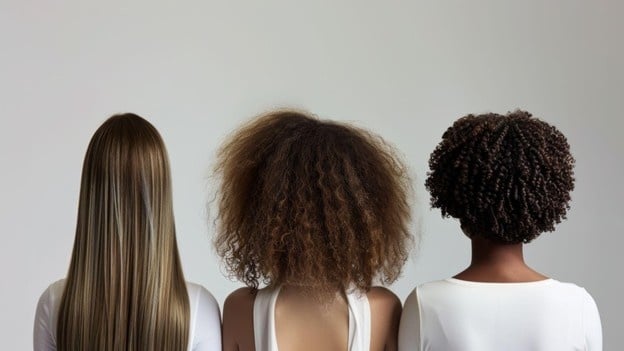
The Hair Texture Classification System
The most widely used hair typing system was created by Andre Walker and categorizes hair into four main types with multiple subcategories.
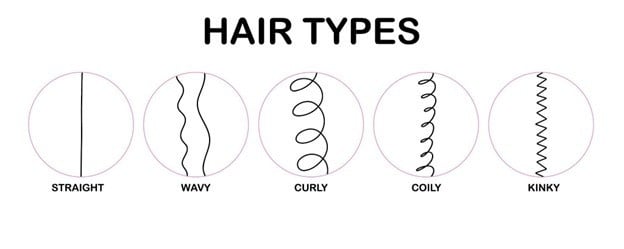
- Type 1 represents straight hair with no curl pattern.
- Type 2 covers wavy hair that falls between straight and curly.
- Type 3 encompasses curly hair with defined curl patterns.
- Type 4 describes coily or kinky hair with tight curl patterns or zigzag shapes.
Within each main type, subcategories A, B, and C indicate increasing texture intensity. For example, 2A represents loose waves while 2C shows much tighter, more defined waves approaching curly territory.
This system provides a common language for discussing hair texture professionally. When a client mentions they have 3B curls, you immediately understand their hair characteristics and appropriate treatment approaches.
Understanding this classification helps you recommend products, choose hair cutting techniques, and set realistic styling expectations based on each client’s natural texture. And remember, strong client consultation skills are what allow you to translate this technical knowledge into practical conversations with real clients.
Type 1: Straight Hair Characteristics and Styling
Straight hair lacks any natural curl pattern and typically lies flat against the head when dry.
Type 1A
Type 1A represents fine, thin straight hair that’s often soft and silky but can appear flat and lifeless. This texture struggles holding styles and volume. Styling requires volumizing products applied at roots, blow-drying with round brushes for lift, and avoiding heavy products that weigh hair down. We teach students to use lightweight mousses and avoid oils near the roots for this texture.
Type 1B
Type 1B describes medium-textured straight hair with slightly more body than 1A. This texture holds styles better and has natural volume. Styling remains relatively simple with standard blow-drying techniques and moderate product use. This is the most versatile straight hair texture, accepting both sleek styles and textured looks with proper products.
Type 1C
Type 1C represents coarse, thick straight hair that’s the most resistant to styling. This texture can appear heavy and doesn’t curl easily even with heat styling. Approach this texture with smoothing products, proper heat protection, and realistic expectations about curl longevity. Sleek, straight styles showcase this texture beautifully while fighting its natural tendency proves frustrating.
Straight hair generally requires less moisture than textured hair but needs volumizing support at roots. Cutting techniques should create movement and dimension since the hair naturally falls flat. Layering, texturizing, and strategic length removal prevent the heavy, triangular shapes straight hair often creates.
Type 2: Wavy Hair Characteristics and Styling
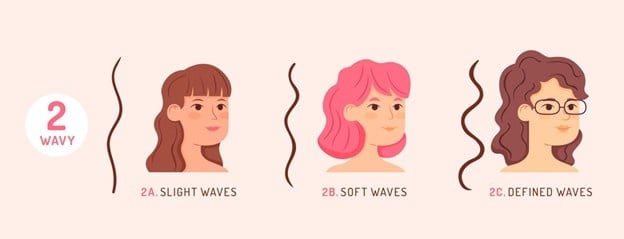
Wavy hair forms S-shaped patterns creating texture between straight and curly.
Type 2A
Type 2A shows loose, barely-there waves that often straighten easily with minimal effort. This texture tends toward fine or thin density. Styling focuses on enhancing the natural wave pattern with sea salt sprays, light mousses, and air-drying or diffusing.
We train students to scrunch products into wet hair and avoid brushing when dry, which disrupts the wave pattern. This texture responds well to beach wave techniques and effortless styling approaches.
Type 2B
Type 2B features more defined waves with moderate volume and some frizz tendency. The S-pattern becomes more obvious and the texture has more body. Styling requires balancing moisture without weighing down the waves.
Light leave-in conditioners, curl creams, and diffusing bring out the best in 2B hair. This texture benefits from clarifying treatments since product buildup flattens the wave pattern quickly.
Type 2C
Type 2C represents the waviest category with defined S-shaped waves approaching curl territory. This texture shows significant volume and frizz unless properly moisturized. Styling techniques mirror curly hair approaches more than straight hair methods.
Heavier curl creams, defining gels, and careful drying techniques preserve the wave pattern. This texture often experiences frizz at the crown while the lengths remain relatively smooth.
Wavy hair styling requires understanding that dry cutting shows the true shape while wet cutting can mislead. Layers need strategic placement to remove weight without creating frizz. We emphasize checking the natural wave pattern before deciding cutting angles and layering strategies.
Type 3: Curly Hair Characteristics and Styling
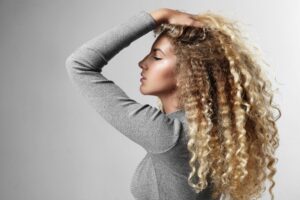
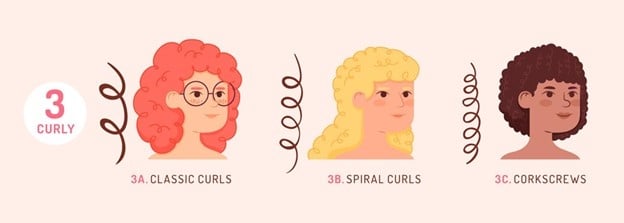
Curly hair forms definite curl patterns ranging from loose spirals to tight corkscrews.
Type 3A
Type 3A features loose, large curls with a circumference roughly the width of sidewalk chalk. These curls show definite spiral patterns with good shine. Styling focuses on defining the natural curl pattern with curl-enhancing creams, avoiding products that cause crunch, and diffusing or air-drying.
This texture tolerates some brushing better than tighter curl patterns but still benefits from wide-tooth combing only when wet with conditioner. Heat styling can temporarily straighten 3A curls but they return with washing.
Type 3B
Type 3B shows springier, tighter curls with circumference similar to a marker. Volume increases significantly compared to 3A, and the texture requires more moisture. Styling demands richer products including leave-in conditioners, curl creams, and defining gels applied to soaking wet hair. The squish-to-condish method and plopping techniques work beautifully for this texture. We teach students to section hair during product application for even distribution and definition.
Type 3C
Type 3C represents the tightest curls in the Type 3 category with pencil-width circumference. This texture shows significant volume, requires substantial moisture, and experiences shrinkage when drying.
Styling needs heavier butters, creams, and oils to maintain moisture and definition. Techniques like the LOC method—liquid, oil, cream—layering work well. This texture benefits from protective styling and careful manipulation to prevent breakage.
Cutting and styling curly hair requires specialized training. We emphasize dry cutting for curls since wet cutting can mislead about the final length and shape after shrinkage. Understanding curl patterns and cutting to enhance rather than fight the natural texture is essential.
Type 4: Coily Hair Characteristics and Styling
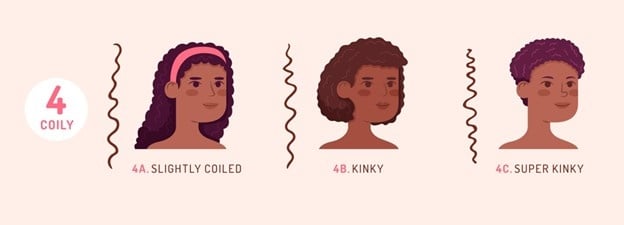
Coily hair forms tight curl patterns, zigzag shapes, or appears to have no defined pattern but significant texture.
Type 4A
Type 4A features tightly coiled hair with visible S-shaped curl patterns roughly the size of a crochet needle. This texture shows significant shrinkage—often 70% or more—and requires substantial moisture. Styling emphasizes moisture retention through heavy creams, butters, and oils.
Techniques like twist-outs, braid-outs, and wash-and-go styles work beautifully. We teach students about shrinkage management and setting realistic length expectations. This texture benefits from protective styling to retain length and minimize manipulation.
Type 4B
Type 4B shows zigzag patterns rather than defined coils with even tighter bends. This texture is extremely fragile and requires gentle handling. Styling prioritizes moisture and protection over definition. Heavy oils, butters, and creams are essential. Protective styles like braids, twists, and updos minimize daily manipulation that can cause breakage.
This texture responds well to stretching techniques like banding, African threading, or blow-drying on cool settings with proper heat protection. Our guide on how to braid African hair covers many of the foundational techniques that serve Type 4B clients especially well.
Type 4C
Type 4C represents the most fragile texture with extremely tight, densely packed coils or no visible curl pattern. Shrinkage can exceed 75%, meaning hair appears much shorter than actual length. Styling requires maximum moisture, minimal manipulation, and protective styling as the primary approach.
Deep conditioning treatments, regular oil treatments, and gentle detangling methods are essential. We emphasize to students that this texture requires specialized knowledge and extra care to maintain healthy length.
Cutting coily hair demands understanding shrinkage and curl patterns. Wet cutting shows completely different length than dry styling. Many stylists specializing in Type 4 hair prefer cutting dry or on stretched hair to see the true shape. This is precisely why mastering textured hair is one of the most valuable things you can do for your career.
Common Hair Texture Challenges and Solutions
Most people don’t have uniform texture throughout their entire head, which complicates styling. Mixed textures require hybrid approaches. Someone with 2B waves at the crown and 3A curls underneath needs different products and techniques for each section. We train students to assess texture throughout the entire head and customize approaches accordingly.
Heat damage can permanently alter natural texture, creating straight sections among curly patterns. This requires careful cutting to blend damaged areas while the client grows out healthy texture or commits to transitioning through the awkward phase.
Chemical treatments like relaxers, texturizers, and perms obviously change natural texture. Growing out these treatments creates dual-texture challenges requiring specialized cutting and styling during the transition period.
Porosity affects how hair absorbs and retains moisture regardless of texture type. High porosity hair needs heavier products and protein treatments. Low porosity requires heat for product penetration and lighter formulations. Understanding porosity alongside texture type creates complete hair analysis.
Professional Texture Assessment During Consultations
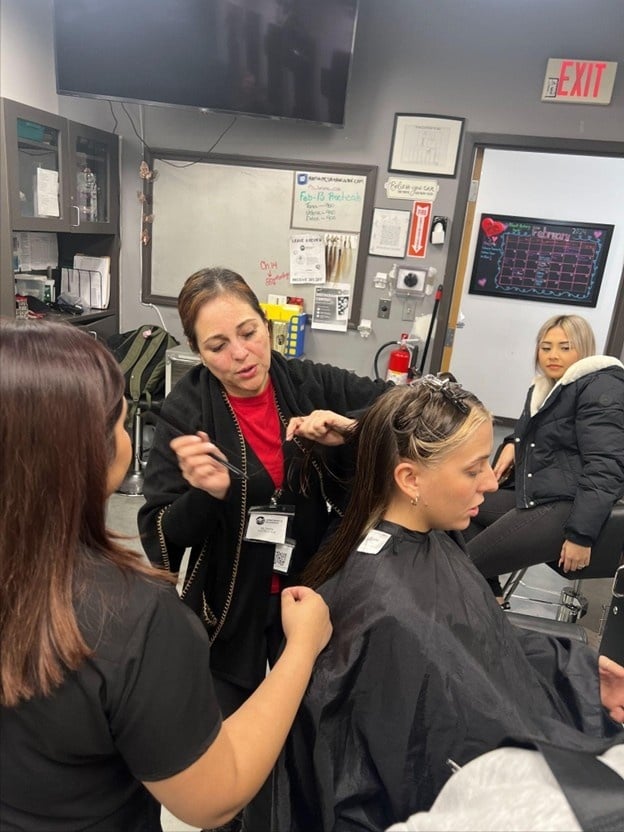
Both experienced and aspiring hairstylists should assess texture thoroughly during every consultation.
- Examine dry, unstyled hair when possible. Natural texture shows most accurately when hair hasn’t been manipulated with products or heat styling. Ask clients about their washing and styling routine since this affects what you’re seeing.
- Feel the hair texture between your fingers. Fine hair feels silky and delicate. Medium texture has moderate body. Coarse hair feels thick and robust. Density—how much hair is present—differs from texture but affects styling choices.
- Check elasticity by gently stretching a strand. Healthy hair stretches and returns to its original length. Overstretched hair that doesn’t return indicates damage requiring treatment before chemical services.
- Assess porosity using the water test. Spray a section and watch how quickly water absorbs. Immediate absorption indicates high porosity. Water beading on the surface suggests low porosity. This information guides product recommendations.
Hair texture education continues throughout your entire career, not just during initial training. Each texture type requires deep understanding that comes from working with diverse clients regularly. If you’re looking for the top beauty schools for hair styling, contact us!
At Cosmetology and Spa Academy we’ve gathered some of the best professionals in the cosmetology and hair styling field. We provide foundational texture knowledge through our comprehensive cosmetology program, but specialization develops through continued education and experience.
Call 815-455-5900 or email info@csa.edu to learn about our programs at any of our four locations. We prepare students to work confidently with all hair textures through hands-on training with diverse clientele.