Your hands shake a little the first time you hold professional shears. That nervous energy—that’s exactly where every successful stylist, esthetician, and makeup artist started. We’ve seen thousands of students walk through our doors at Cosmetology & Spa Academy with that same mix of excitement and uncertainty. The question they all ask? “How do I know I’m choosing the best cosmetology school?”
It’s not about finding the “best” school in some generic ranking. It’s about finding the right fit for your goals, your learning style, and your life. Let’s talk about what actually matters.
What Makes a Beauty School Worth Your Time and Money
The beauty industry doesn’t mess around. You’re not just learning to make people look good—you’re building technical skills that require precision, creativity, and constant practice.
We’ve trained students for over two decades, and we’ve learned this: the schools that produce confident, job-ready graduates share specific characteristics. Not flashy marketing. Real substance.
Hands-On Training Hours That Actually Mean Something
Here’s something most schools won’t tell you upfront: not all training hours are created equal. Some programs pack students into lecture halls for theory, then rush them through practical work.
The difference is in the ratio. At our cosmetology school, we flip that script. Theory matters—you need to understand the science behind what you’re doing. But your hands need to know it even better.
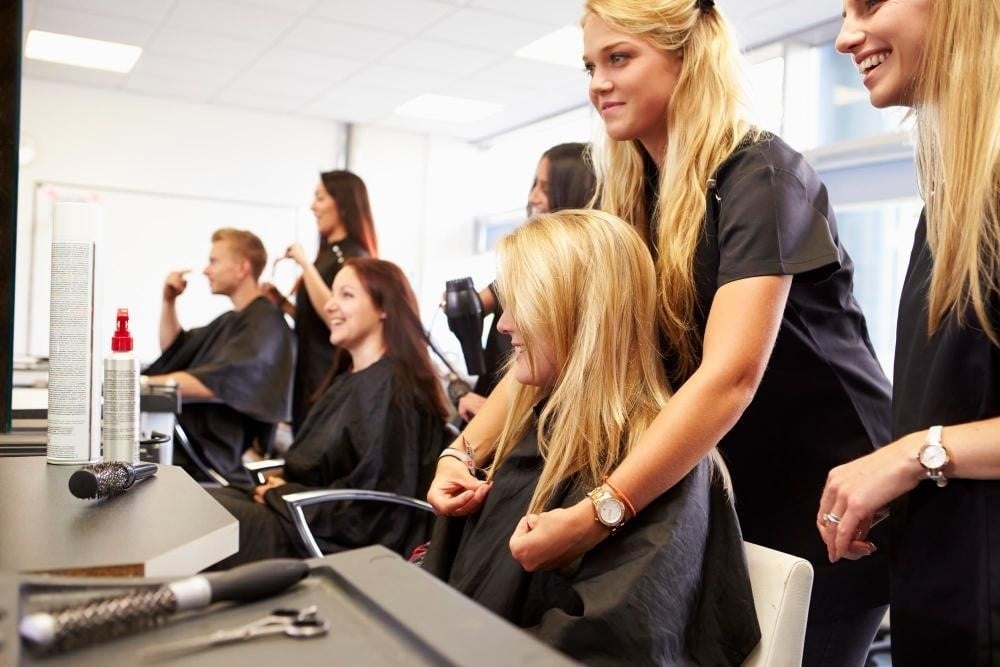
Look for schools where you’re working on real clients early in your training. Mannequins teach you the basics. Real people with different hair textures, skin types, and expectations? That’s where you actually learn.
We watch students transform around month three. They stop asking permission for every decision. Their hands move with confidence. That doesn’t happen watching demonstrations. It happens through repetition with proper guidance.
Instructors Who’ve Actually Worked in the Industry
You know that teacher who changed your life? The one who just got it and made you believe you could too?
Beauty education needs instructors like that. Not just licensed cosmetologists, but professionals who’ve worked salon floors, dealt with difficult clients, built their own books, and understand what employers actually want.
Our instructors have worked everywhere from small-town salons to upscale spas. They bring real stories, real techniques, and real connections. When they teach you how to handle a color correction gone wrong, they’re pulling from actual 2 a.m. panic moments—not just textbook scenarios.
Ask potential schools about their instructors’ backgrounds. How long did they work in the field? Do they still keep current with industry trends? Can they connect you with salon owners and hiring managers? If the answer is vague, that’s your red flag.
The Facilities and Tools Question Everyone Overlooks
Walk into a salon with outdated equipment and products from 2010. Feel weird? Your clients will too. Beauty education requires modern tools because that’s what you’ll use in your career. Professional-grade shears, current color lines, modern facial equipment, the latest nail systems. They’re requirements.
We’ve invested heavily in our facilities across all four locations because we refuse to send graduates into salons where they’ve never touched the same tools they’ll use daily. That learning curve on your first day? We want it as small as possible.
Tour any school you’re considering. Not just an admissions office walk-through—actually see the training floor. Are students using professional products? Do they have individual workstations? Is the equipment well-maintained or visibly worn?
Interested in checking out our campuses up close? Book a tour!

Class Size Actually Impacts Your Education
Forty students to one instructor? That’s not education. That’s crowd management. We cap our class sizes intentionally. Not because we don’t want more students—we could easily pack more people in. But you can’t get personalized feedback on your technique when your instructor is juggling three dozen other students.
Smaller classes mean your instructor notices when you’re holding your shears at the wrong angle. They catch bad habits before they become ingrained. They push you on the skills you’re avoiding because they’re hard.
You’re not just a student ID. We know your name, your strengths, your struggle areas, and your career goals. That’s not possible in factory-style programs.
Licensing Pass Rates Tell the Real Story
Every state requires cosmetologists to pass licensing exams. It’s not optional. And here’s the thing—if a school’s graduates consistently fail those exams, that’s a massive problem.
Pass rates are public information. Schools try to bury this data, but you can find it through your state’s cosmetology board. Look at both written and practical exam pass rates.
Programs with pass rates below 80%? That’s a warning sign about education quality. The best schools prepare you so thoroughly that the state exam feels manageable, not overwhelming.
We build cosmetology licensing prep into our curriculum from day one. You’re not cramming theory the week before your exam. You’re learning it properly throughout your program, then reviewing strategically.
Our graduates walk into those exams knowing their stuff. That confidence comes from preparation that starts on day one, not day 365.
Job Placement Support That Goes Beyond a Bulletin Board
“We have job placement assistance” sounds great until you realize it means a cork board with some salon business cards pinned to it. Real job placement support includes resume building, interview practice, portfolio development, and actual connections with hiring managers. We’ve spent years building relationships with salons, spas, and beauty businesses throughout the region.
When you’re ready to start your career, we’re not just handing you a list of potential employers. We’re making introductions, providing references, and often connecting you with alumni who are now hiring.
Some of our graduates now own their own salons. They call us when they’re hiring because they know our training. That network becomes your network.
Ask schools about their job placement statistics. Not “assistance”—actual placement rates. Where do graduates work? How long does it typically take to find employment after graduation?
Vague answers mean they don’t track this data. And if they don’t track it, they probably don’t prioritize it.
Financial Investment and Realistic Expectations
Beauty school costs money. Anyone promising otherwise is lying. But the right program is an investment, not an expense. You’re gaining skills that will earn you income for decades. The question isn’t just cost—it’s value.
Quality programs charge what they’re worth. Rock-bottom prices usually mean corners cut somewhere. Outdated products. Overworked instructors. Insufficient hands-on hours. Limited client interaction.
We’re transparent about costs because you deserve to make informed decisions. Financial aid options exist. Payment plans help. Cosmetology scholarships are available for qualifying students. What matters more than the price tag is what you’re getting. Programs that rush you through in minimum hours versus programs that ensure you’re actually ready? That difference shows up in your entire career.
Calculate the lifetime earning potential of a skilled cosmetologist versus the program cost. When you look at it over 20-30 years, investing in quality training is one of the smartest financial decisions you can make.
Location and Schedule Flexibility Matter More Than You Think
Life doesn’t pause while you’re in beauty school. Jobs, kids, family obligations—they all continue. Schools that offer only one rigid schedule make it nearly impossible for many people to attend. We’ve structured our programs with working adults in mind. Day classes, evening options, weekend availability—we make it work around your life.
Location matters too. A 90-minute commute each way turns a manageable program into an exhausting ordeal. With campuses in Crystal Lake, Elgin, Rockford and Schaumburg, we’ve made quality cosmetology education accessible across the region.
You shouldn’t have to choose between excellent training and reasonable logistics. Both are possible.

The Culture and Community You’ll Join
You’ll spend hundreds of hours with your classmates. The vibe of a school, how students treat each other, how instructors interact with the class, whether creativity is encouraged or stifled, shapes your entire experience.
We’ve built a culture of support and growth. Students help each other. Competition exists, but it’s healthy. Pushing everyone to improve, not tearing anyone down.
Visit schools when classes are in session. Talk to current students without admissions staff hovering. Ask them honest questions: Do they feel supported? Are instructors accessible? Would they choose this school again? Their unfiltered answers tell you everything a brochure won’t.
Frequently Asked Questions About Choosing a Beauty School
How long does cosmetology school take?
Most full-time programs run 9-12 months, though this varies by state requirements and school structure. Illinois requires 1,500 hours of training.
Part-time options extend the timeline but make training accessible while you work. Quality programs focus on competency, not just seat time. You should graduate when you’re actually ready, not when an arbitrary calendar says so.
What’s the difference between a cosmetology program and specialized training?
Cosmetology covers hair, skin, nails, and makeup—giving you broad skills and maximum career flexibility. Specialized programs like esthetics or nail technology dive deeper into specific areas with fewer required hours. Your choice depends on career goals.
Want to own a full-service salon? Cosmetology makes sense. Passionate specifically about skincare? An esthetics program might be your ideal choice. Many students start broad, then specialize later.
Do beauty schools really help with job placement?
This varies dramatically by school. Some provide genuine support—resume help, interview prep, employer connections, and ongoing career guidance. Others list a few salon phone numbers and call it placement assistance. Ask specific questions:
What percentage of graduates find employment within six months? Can you speak with recent graduates about their experience? Does the school maintain relationships with local employers?
At info@csa.edu, we’re happy to connect you with our alumni who can share their placement experience honestly.
Can I work while attending beauty school?
Many students do. Part-time and evening programs exist specifically for working adults. The key is finding a school with schedule flexibility.
We offer various scheduling options because we know most students have existing obligations. Be realistic about your capacity. Beauty school requires significant hands-on practice. Trying to work full-time while attending full-time training usually leads to burnout or incomplete learning.
What financial aid options exist for cosmetology students?
Federal financial aid (FAFSA) is available for students attending accredited programs. This includes grants, loans, and work-study options. Some schools offer scholarships based on merit or need.
Payment plans break tuition into manageable monthly amounts. Veterans may qualify for GI Bill benefits. State-specific grants exist in some locations. Start by completing FAFSA, then discuss options with your chosen school’s financial aid office. Don’t let tuition be the only factor in your decision. Investment in quality training pays off throughout your career!
How do I know if a beauty school is accredited?
Accreditation ensures a school meets specific educational standards and qualifies for federal financial aid. Check with organizations like NACCAS (National Accrediting Commission of Career Arts & Sciences).
Your state’s cosmetology board maintains lists of approved programs. Accreditation matters for licensing eligibility and employer recognition. If a school can’t clearly explain their accreditation status or gets defensive when asked, that’s a significant red flag. This information should be readily available and clearly communicated.
👉 Learn more about beauty school accreditation and licensure