Consultations fall apart when barbers can’t speak the language of beard styles. A client sits in your chair asking for “something professional but not boring.” Without solid knowledge of beard styles for face shapes, and modern trends, you’re guessing. That costs you credibility, time, and repeat bookings.
Getting quality education through our barbering program means you’ll enter your professional career with confidence, comprehensive skills, and the ability to serve diverse clients effectively. Beard styling isn’t optional anymore—it’s essential expertise every barber needs.
Beard grooming represents massive revenue potential. Guys are booking regular maintenance, buying products, and paying premium prices for barbers who truly understand facial hair styling.
Let’s break down the essential beard styles, techniques, and consultation strategies every professional barber needs in 2026.
Why Beard Expertise Matters for Your Income
Men’s grooming continues exploding as a market segment, and beard services drive significant revenue.
The numbers tell the story. A basic haircut runs $30-40 in most markets. Add beard sculpting and that jumps to $50-65. You’ve increased revenue 50% for just fifteen additional minutes of work.
Beard clients also book more frequently than haircut-only clients. Hair grows every 3-4 weeks. Beards need professional maintenance every 2-3 weeks for guys who take their appearance seriously.
More frequent bookings mean steadier income and stronger client relationships. When someone trusts you with their complete grooming routine, they become loyal long-term clients who refer friends. For more on the financial upside of this career, read about the top paying beauty careers in Illinois.
We emphasize beard training because ignoring this skill set means leaving money on the table. The barbers earning top income master complete men’s grooming, not just haircuts.
Understanding Face Shapes and Beard Compatibility
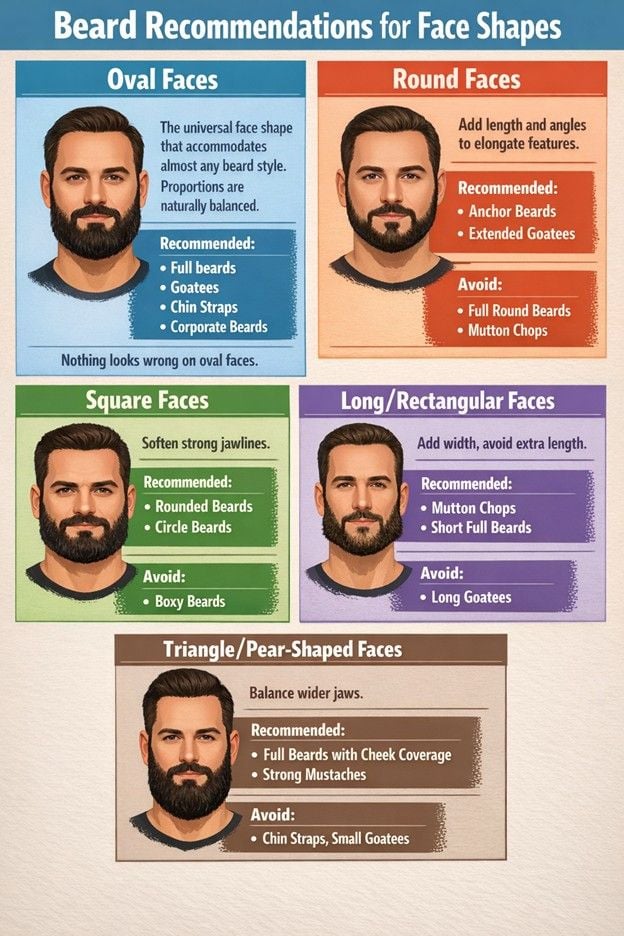
Not every beard works on every face. That’s fundamental to good consultations. Your job is matching beard styles to face shapes, natural growth patterns, and lifestyle requirements. This knowledge lets you confidently recommend styles rather than asking clients what they want. Strong client consultation skills are just as important as technical ability when building a loyal book of clients.
Oval Faces
The universal face shape that accommodates almost any beard style. Proportions are naturally balanced.
- Recommendation: Full beards, goatees, chin straps, extended goatees, corporate beards. Nothing looks wrong on oval faces.
Round Faces
Round faces need length and angles to create the illusion of elongated features and defined jawlines.
- Recommendation: Anchor beards, extended goatees, any style emphasizing chin length while keeping sides shorter. Vertical lines elongate round faces effectively.
- Avoid: Full round beards that emphasize circular shapes. Mutton chops that add horizontal width.
Square Faces
Strong, angular jawlines benefit from beards that soften rather than emphasize existing angles.
- Recommendation: Rounded full beards, circle beards, styles with curved rather than sharp bottom lines. Keep the overall shape softer.
- Avoid: Box-shaped beards that make angular jaws look even more severe.
Long/Rectangular Faces
Long faces require width, not additional vertical length.
- Recommendation: Mutton chops, full beards kept shorter, styles emphasizing side fullness. Create horizontal visual interest.
- Avoid: Goatees or any chin-focused style that extends the face further.
Triangle/Pear-Shaped Faces
Narrow foreheads paired with wider jaws need balance through upper-face emphasis.
- Recommendation: Full beards with solid cheek coverage. Strong mustaches help balance proportions.
- Avoid: Chin-only styles that draw more attention to the already-wide jaw area.
15 Essential Beard Styles Every Barber Should Master
Here’s your comprehensive working knowledge guide. Master these styles and you’ll confidently handle virtually any client request.
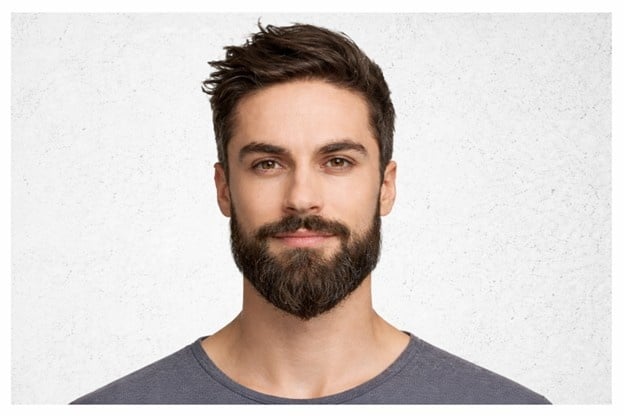
The Full Beard
Full beards provide complete coverage—cheeks, jawline, chin, and upper lip all connected naturally. Length ranges from short (1/2 inch) to long (3+ inches) depending on client preference and professional requirements.
- Best for: Oval, square, and triangle face shapes. Clients with good natural cheek coverage.
- Technique: Use guards for consistent length throughout, or create dimensional interest by keeping sides slightly shorter than chin area. Define crisp cheek lines and clean neck lines. Round the bottom for softer professional looks, square it for more angular contemporary styles.
- Common mistakes: Neglecting neck line definition creates sloppy appearance. Failing to trim mustache separately causes eating difficulties clients complain about.
- Maintenance frequency: Every 2-3 weeks for shape maintenance, weekly for mustache control.
- Products to recommend: Beard oil for hydration, balm for styling and control.
The Short Boxed Beard
This style maintains everything tight—typically 1/4 to 1/2 inch maximum length—with sharp, precisely defined lines along cheeks and jaw.
- Best for: Professional corporate environments. Round and oval faces. Clients wanting beard coverage without bulk.
- Technique: Use short guards (#2 or #3) for overall length consistency. Create crisp cheek lines and jaw definition with detail trimmers or straight razors. Position neck line just above Adam’s apple for clean appearance.
- Common mistakes: Setting cheek lines too high creates unnatural appearance. Uneven guard work shows clearly at short lengths.
- Maintenance frequency: Every 2 weeks to maintain sharp lines.
- Products to recommend: Lightweight beard oil, styling balm for control.
The Classic Goatee
Classic goatees include mustache and chin beard without connecting to sideburns or jaw coverage. Clean, simple, and suitable for various face shapes.
- Best for: Round faces needing length. Patchy cheek growth. Conservative professional settings.
- Technique: Define the goatee width—typically aligning with inner eye corners or slightly wider. Keep mustache and chin beard proportional. Clean shave everything else completely.
- Common mistakes: Making goatees too narrow looks odd. Unequal sides from poor measurement.
- Maintenance frequency: Weekly shaving of cheeks and neck, bi-weekly goatee shaping.
- Products to recommend: Precision mustache wax, beard oil for chin area.
The Extended Goatee (Hollywoodian)
Extended goatees connect mustache to chin beard then extend along the jawline partially. More coverage than classic goatees without full beard commitment.
- Best for: Round and square faces. Clients wanting more coverage than goatees but less than full beards.
- Technique: Create the classic goatee shape, then extend coverage along jawline stopping before reaching sideburns. Keep cheeks and upper neck clean-shaven. Blend the jawline extension smoothly.
- Common mistakes: Extension lines that aren’t symmetrical. Inconsistent width along the jaw.
- Maintenance frequency: Every 2 weeks for shape, weekly for clean shaving areas.
- Products to recommend: Beard oil, detail trimmer for home maintenance.
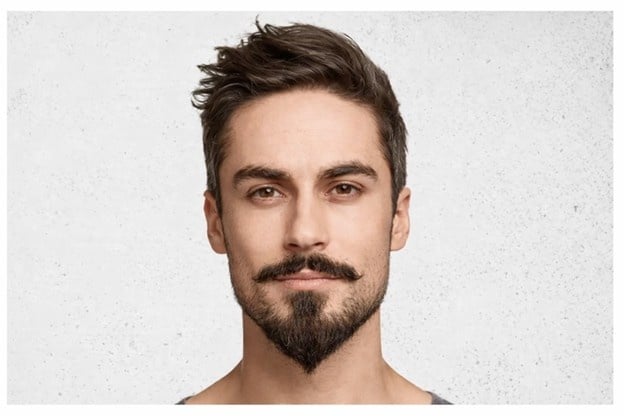
The Van Dyke
Van Dykes combine pointed chin beards with mustaches while keeping the soul patch area clean-shaven. The mustache doesn’t connect to the chin beard.
- Best for: Long and oval faces. Creative professionals, academics. Clients with strong personal style.
- Technique: Sculpt the pointed chin beard carefully for symmetry. Groom mustache separately—can be natural or waxed into points. Maintain clear separation between mustache and chin beard.
- Common mistakes: Off-center chin beards look terrible. Poorly maintained mustaches overpower the balance.
- Maintenance frequency: Weekly for precise shape maintenance.
- Products to recommend: Strong mustache wax, beard oil for chin beard.
The Circle Beard
Circle beards combine rounded goatees with mustaches in one continuous circular shape around the mouth. Clean and professional.
- Best for: Square and round faces. Professional corporate environments. Clients wanting simple, clean styles.
- Technique: Create circular shape connecting mustache seamlessly to goatee. Keep the circle proportional to face size—not too small or oversized. Shave everything outside the circle cleanly.
- Common mistakes: Circle not actually circular—measure carefully. Size disproportionate to face.
- Maintenance frequency: Every 2 weeks for shaping, weekly for surrounding areas.
- Products to recommend: Light beard oil, balm for shape control.
The Anchor Beard
Anchor beards combine pointed chin beards with thin lines extending along the jaw to a small mustache. The overall shape resembles a ship’s anchor.
- Best for: Round and oval faces. Clients with good chin hair but patchy cheeks.
- Technique: Create the pointed chin beard base. Add thin, precise lines along the jaw connecting to a trimmed mustache. Keep cheeks completely clean. The soul patch connects everything.
- Common mistakes: Lines too thick lose the anchor definition. Asymmetrical sides from poor planning.
- Maintenance frequency: Weekly for maintaining thin connecting lines.
- Products to recommend: Precision trimmer for home touch-ups, beard oil.
The Balbo
Balbo beards feature disconnected mustaches above chin beards that extend along the jawline without connecting to sideburns. Think Robert Downey Jr.
- Best for: Round, oval, and square faces. Creative professionals. Clients wanting distinctive style.
- Technique: Shape the chin and jaw area first, leaving mustache area disconnected. The jaw extension typically stops before reaching sideburns. Mustache can be natural or styled.
- Common mistakes: Extensions too long look unbalanced. Poor symmetry between sides.
- Maintenance frequency: Every 2 weeks for shape, weekly for disconnected areas.
- Products to recommend: Beard oil, mustache wax if client prefers styled look.
The Stubble/5 O’Clock Shadow
Maintained stubble keeps beard at 1-3mm length consistently. More deliberate than simple laziness—requires regular maintenance for even appearance.
- Best for: All face shapes. Clients wanting minimal maintenance. Younger clients starting beard growth.
- Technique: Use adjustable trimmer at lowest settings (#0.5 or #1). Maintain even length across entire beard area. Define neck line and cheek line subtly—stubble still needs boundaries.
- Common mistakes: Uneven length from inconsistent trimmer technique. Neglecting lines makes it look genuinely lazy rather than styled.
- Maintenance frequency: Every 3-5 days to maintain consistent length.
- Products to recommend: Beard oil prevents itching at stubble length.

The Beardstache
Beardstaches feature prominent, often styled mustaches paired with very short beard stubble. The contrast creates visual interest and personality.
- Best for: Oval and square faces. Clients with strong mustache growth. Creative and fashion-forward individuals.
- Technique: Maintain beard at stubble length (#1 or #2 guard). Let mustache grow substantially longer and style it. Create clear definition between the two lengths.
- Common mistakes: Mustache not prominent enough—the contrast needs to be obvious. Poor mustache maintenance undermines the entire style.
- Maintenance frequency: Weekly beard trimming, daily mustache grooming.
- Products to recommend: Strong mustache wax, light beard oil for stubble.
The Ducktail Beard
Ducktail beards provide full coverage that extends into a pointed shape at the chin, resembling a duck’s tail. Rugged yet refined.
- Best for: Round and square faces. Clients with length and fullness. Creative professionals.
- Technique: Grow full beard with good length (2-4 inches). Shape the bottom into a point by trimming sides shorter while leaving center length. Blend smoothly from sides to point.
- Common mistakes: Point not centered looks awful. Sides trimmed too short lose the full beard appearance.
- Maintenance frequency: Every 3 weeks for shape, more frequent mustache trimming.
- Products to recommend: Beard oil, balm for styling the point.
The Corporate Beard
Corporate beards provide complete coverage while maintaining neat, business-appropriate appearance. Length stays under 1 inch with sharp definition.
- Best for: Professional business environments. All face shapes. Executives and corporate clients.
- Technique: Maintain uniform length around 1/2 to 3/4 inch. Create sharp, clean lines at cheeks and neck. Keep mustache trimmed above lip line. Overall appearance should be meticulously groomed.
- Common mistakes: Length too long for conservative environments. Undefined lines create messy appearance.
- Maintenance frequency: Every 2 weeks minimum for professional appearance.
- Products to recommend: Beard oil, styling balm, quality trimmer for home maintenance.
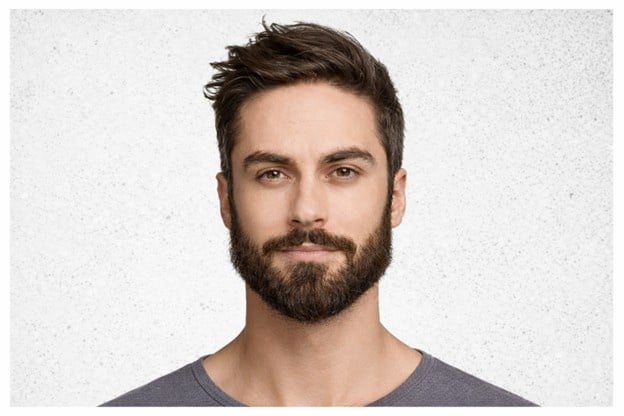
The Mutton Chops
Mutton chops extend sideburns down to the jawline with substantial width while keeping chin clean-shaven. Can connect to mustache or remain separate.
- Best for: Long faces needing width. Strong jawlines. Clients with confident personal style.
- Technique: Grow and shape sideburns extending down along jaw. Width varies but typically substantial. Keep chin and lower jaw area clean-shaven. Blend smoothly from sideburn to chop.
- Common mistakes: Asymmetrical sides are immediately obvious. Width disproportionate to face size.
- Maintenance frequency: Weekly for maintaining clean-shaven areas, bi-weekly for chop shaping.
- Products to recommend: Beard oil for chops, precision trimmer for boundaries.
The Chin Strap
Chin straps create thin lines of facial hair following the jaw from ear to ear, sometimes including or excluding the chin area. Clean and defined.
- Best for: Round and oval faces. Younger clients. Professional environments accepting facial hair.
- Technique: Create thin, consistent lines following the natural jawline. Width typically 1/4 to 1/2 inch. Keep everything else clean-shaven. Precision is essential—uneven lines destroy the look.
- Common mistakes: Lines too thick lose the chin strap aesthetic. Wavy lines from poor technique.
- Maintenance frequency: Weekly to maintain thin lines and clean areas.
- Products to recommend: Beard oil for the narrow line, precision trimmer.
The Fade Beard
Fade beards use clipper techniques to blend beard length gradually from very short at cheeks to longer at chin, often coordinating with hair fades for cohesive appearance. This pairs naturally with the advanced techniques covered in our advanced barbering techniques guide.
- Best for: All face shapes. Fashion-forward clients. Works brilliantly with modern haircuts.
- Technique: Start with desired chin length, then gradually shorten using progressive guards as you move up the cheek. Blend smoothly with no visible lines. Can coordinate fade with haircut fade for seamless transition.
- Common mistakes: Visible lines between guard lengths. Fade gradient too abrupt or too subtle.
- Maintenance frequency: Every 2 weeks to maintain fade precision.
- Products to recommend: Beard oil, styling balm for longer areas.
| Beard Style | Best Face Shapes | Skill Level | Maintenance Frequency | Professional Setting |
| Full Beard | Oval, Square, Triangle | Intermediate | Every 2-3 weeks | Depends on length/neatness |
| Short Boxed Beard | Round, Oval | Beginner | Every 2 weeks | Highly professional |
| Classic Goatee | Round, Oval | Beginner | Every 1-2 weeks | Professional |
| Extended Goatee | Round, Square | Intermediate | Every 2 weeks | Professional |
| Van Dyke | Long, Oval | Advanced | Weekly | Creative/Academic |
| Circle Beard | Square, Round | Beginner | Every 2 weeks | Highly professional |
| Anchor Beard | Round, Oval | Advanced | Weekly | Business casual |
| Balbo | Round, Oval, Square | Intermediate | Every 2 weeks | Creative professional |
| Stubble | All shapes | Beginner | Every 3-5 days | Casual/Creative |
| Beardstache | Oval, Square | Intermediate | Weekly | Creative/Fashion |
| Ducktail | Round, Square | Advanced | Every 3 weeks | Creative/Casual |
| Corporate Beard | All shapes | Intermediate | Every 2 weeks | Highly professional |
| Mutton Chops | Long faces | Advanced | Weekly | Creative/Statement |
| Chin Strap | Round, Oval | Intermediate | Weekly | Professional |
| Fade Beard | All shapes | Advanced | Every 2 weeks | Modern/Fashion |
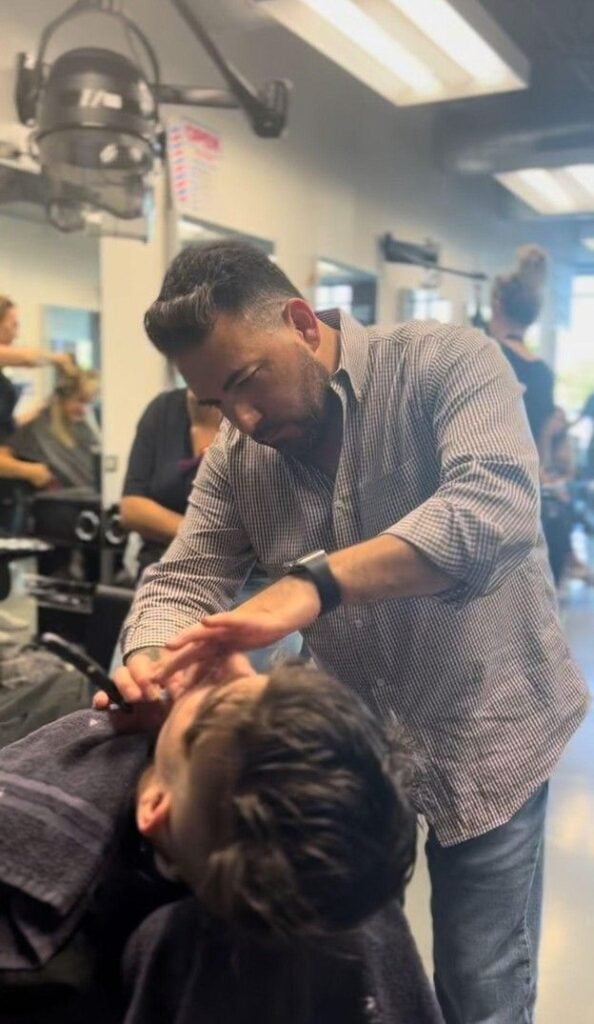
How Cosmetology & Spa Academy Prepares You for Men’s Grooming Success
At Cosmetology & Spa Academy, we understand that comprehensive barbering education goes far beyond basic haircuts. Our instructors bring real-world experience to the classroom, teaching you the beard styling techniques, client consultation skills, and business strategies that build successful careers.
You’ll master classic styles and contemporary trends while learning the face shape analysis that makes you confident during every consultation. We also cover hairstyling differences between men and women so you’re fully equipped for any client who walks through the door.
We provide hands-on training with professional-grade tools and products at all four of our locations. Students work on real clients in our training salons, gaining the practical experience employers value most.
Our programs cover complete men’s grooming—haircuts, fades, beard sculpting, hot towel shaves, and product knowledge. We also emphasize the business side of barbering that many programs ignore. Pricing strategies, client retention, retail sales techniques, and building your personal brand—these skills determine your actual income as much as technical ability. Down the road, many of our graduates even go on to open their own salon in Illinois.