

We see confusion about perms and relaxers constantly among students beginning their cosmetology training. The terms get used interchangeably in casual conversation, but professionally they represent completely different chemical processes with different goals, techniques, and safety considerations.
Understanding these differences isn’t just academic knowledge. Mixing up these services or misunderstanding the chemistry behind them can cause severe hair damage, chemical burns, and disappointed clients. Let’s break down exactly what separates these two chemical treatments.
The Basic Difference: Adding Curl vs Removing Curl
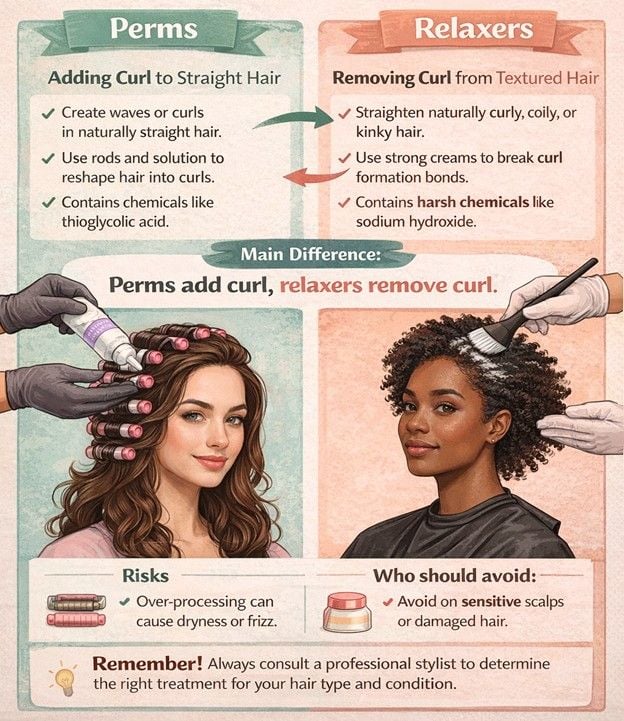
The fundamental distinction is simple. Perms add curl or wave to straight hair. Relaxers remove curl from textured hair, making it straighter.
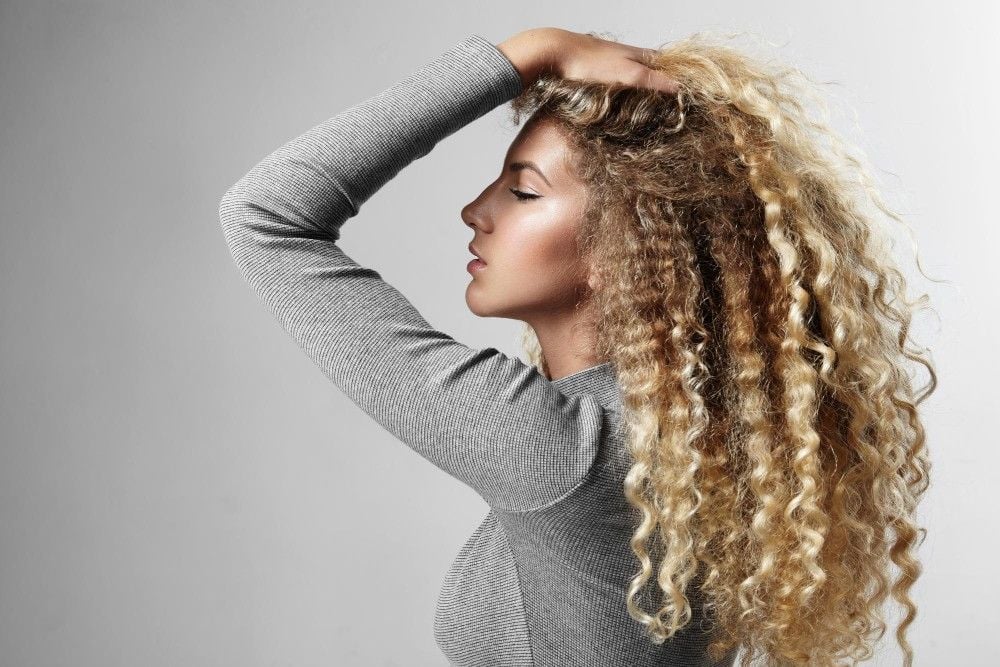
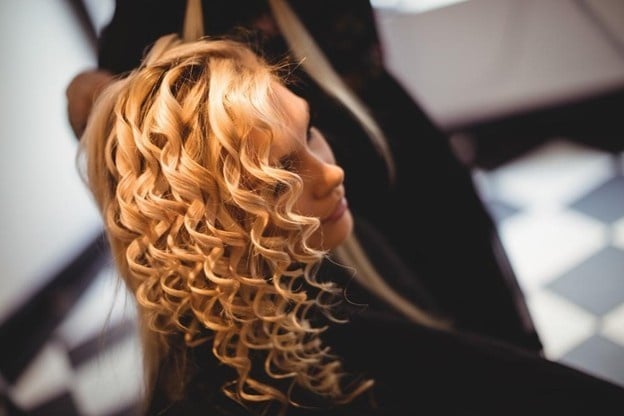
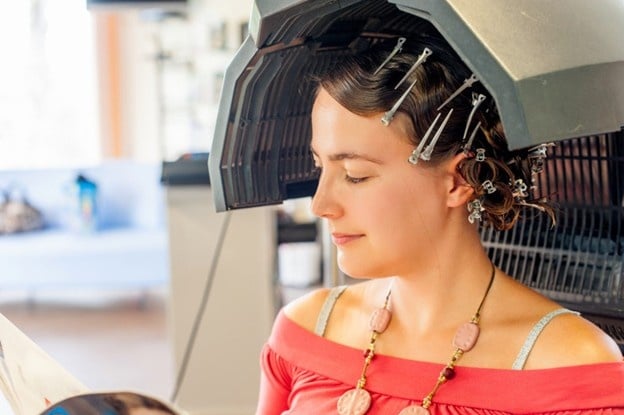
Perms take naturally straight or wavy hair and create defined curl patterns ranging from loose waves to tight spiral curls. The process wraps hair around rods of various sizes while chemical solutions break and reform bonds in curved shapes.
Relaxers take naturally curly, coily, or kinky hair and straighten it by breaking the bonds that create curl patterns. The process applies chemicals to textured hair and combs it straight while the bonds reform in straightened positions.
Both services permanently alter the treated hair until it grows out, but they achieve opposite results through related but distinct chemical processes. If you want to understand why textured hair behaves the way it does before introducing any chemical hair treatments, our hair texture types guide provides essential foundational context.
How Perms Work: The Chemistry of Creating Curls
Perms work by breaking disulfide bonds within the hair’s structure, reshaping those bonds around perm rods, then reforming the bonds in new curved positions.
The process starts with wrapping wet hair around plastic or foam rods in the desired curl size and pattern. Smaller rods create tighter curls. Larger rods produce looser waves. Rod placement and wrapping technique determine the final curl pattern throughout the head.
We teach students at Cosmetology & Spa Academy that perm solution contains either thioglycolic acid or cysteamine, which are reducing agents that break the disulfide bonds holding hair in its natural shape. These bonds are the strongest structural connections in hair and must be broken to change the hair’s shape permanently.
After the perm solution processes for the recommended time—usually 15-25 minutes depending on hair texture and desired curl—the bonds are broken and hair takes the shape of the rods it’s wrapped around. Timing is critical here. Under-processing means curls won’t hold. Over-processing causes severe damage or breakage.
Neutralizer application follows once processing is complete. Neutralizer contains hydrogen peroxide or sodium bromate, which are oxidizing agents that reform the broken disulfide bonds in their new curved positions around the rods. This locks in the curl pattern permanently until new growth appears.
After neutralizing, rods are removed and hair maintains the curl pattern created by the rod size and wrapping technique. The curl pattern is now permanent in the treated hair, though new growth will still be the client’s natural texture.
How Relaxers Work: The Chemistry of Permanent Hair Straightening
Relaxers also break disulfide bonds but use much stronger chemicals to completely straighten textured hair rather than reshape it into curls.
The process applies thick chemical cream directly to dry hair, typically starting at the mid-lengths and ends before carefully applying to new growth near the scalp. Base creams or petroleum jelly protect the scalp from chemical contact since relaxers can cause severe burns on skin.
Relaxer formulas contain either sodium hydroxide—known as lye relaxers—or alternatives like calcium hydroxide, guanidine hydroxide, or ammonium thioglycolate—called no-lye relaxers. Lye relaxers work faster and straighten more effectively but cause more scalp sensitivity. No-lye relaxers process more slowly and gently but can leave hair drier.
These chemicals break disulfide bonds just like perms, but instead of wrapping hair around rods, the hair is combed straight repeatedly during processing. This mechanical straightening combined with the chemical bond-breaking creates permanent straightness.
Processing time varies based on hair texture, desired straightness, and relaxer strength—typically 10-20 minutes. We emphasize to students that relaxers require constant monitoring since over-processing causes irreversible damage. Hair should never be processed to complete straightness, which would eliminate all strength and elasticity.
Neutralizing shampoo stops the chemical process and begins restoring the hair’s pH balance. Unlike perms where neutralizer reforms bonds, relaxer neutralization simply stops the straightening process and cleanses the chemicals from hair.
The treated hair remains permanently straightened until new growth appears, which will still have the client’s natural texture. Touch-up applications every 8-12 weeks treat only the new growth without overlapping onto previously relaxed hair.
Safety Considerations
Both services carry risks, but relaxers present significantly higher danger potential.
Perm solutions are acidic or alkaline but relatively mild compared to relaxer chemicals. The worst perm damage typically results in dry, frizzy, or broken hair. Painful but manageable for most clients.
Relaxers use extremely caustic chemicals—sodium hydroxide has a pH around 13, making it highly alkaline and corrosive. Contact with scalp causes chemical burns. Over-processing literally dissolves hair. Improper application can cause permanent scarring, hair loss, and severe injury.
We drill safety protocols extensively in our chemical hair treatment training because relaxer accidents have serious consequences. Students learn proper base cream application, timing protocols, overlapping avoidance, and emergency procedures if clients experience burning sensations. This level of technical rigor is part of why prospective students sometimes wonder whether cosmetology school is hard—chemical services are among the most demanding parts of the curriculum!
Many states have additional licensing requirements or restrictions around chemical straightening services specifically because of the increased risk factors. Our guide to getting your cosmetology license covers what Illinois requires before you can legally perform these services on paying clients.
When to Recommend Perms vs Relaxers
Client goals and natural texture determine which service is appropriate, and sometimes neither service is the right choice.
Recommend perms for clients with straight or slightly wavy hair who want defined curl patterns. Good candidates have healthy hair free from significant damage, realistic expectations about maintenance, and willingness to commit to the curl pattern for months until it grows out.
Avoid perms on hair that’s already heavily damaged, previously relaxed, or bleached. The additional chemical processing will likely cause severe damage or breakage. Also discourage clients wanting perms for temporary style changes since the results are permanent until cut off.
Recommend relaxers for clients with naturally curly, coily, or kinky textures who want permanently straightened hair and understand the maintenance commitment. Good candidates have healthy scalps without sensitivity issues, thick enough hair density to withstand some breakage, and realistic understanding that relaxers require regular touch-ups and careful maintenance.
Avoid relaxers on damaged hair, extremely fine or fragile textures, and clients with scalp conditions or sensitivities. Also counsel clients that relaxed hair requires significant moisture maintenance and careful handling to prevent breakage.
The consultation is where all of this gets communicated—developing strong client consultation skills is what separates stylists who avoid chemical disasters from those who don’t.
Modern Alternatives and Trends
Chemical texture services have evolved significantly in recent years with new options available.
Modern perm formulas include gentler chemistry options like Japanese straightening treatments that perm hair straight rather than curly, keratin treatments that temporarily smooth texture, and acid perms using gentler chemicals than traditional alkaline perms.
For clients wanting straighter hair without relaxer commitment, keratin treatments, Brazilian blowouts, and Japanese thermal straightening offer alternatives with varying permanence levels and different maintenance requirements.
We teach students about all these options so they can recommend the best service matching each client’s goals, hair condition, and maintenance willingness. Sometimes suggesting heat styling with proper products beats recommending chemical services that might damage hair.
Learning Chemical Services Properly
Chemical texture services require comprehensive training, careful attention to safety protocols, and hands-on practice under supervision. We dedicate significant time to chemical service education because these services carry the highest risk of severe damage or injury when performed incorrectly.
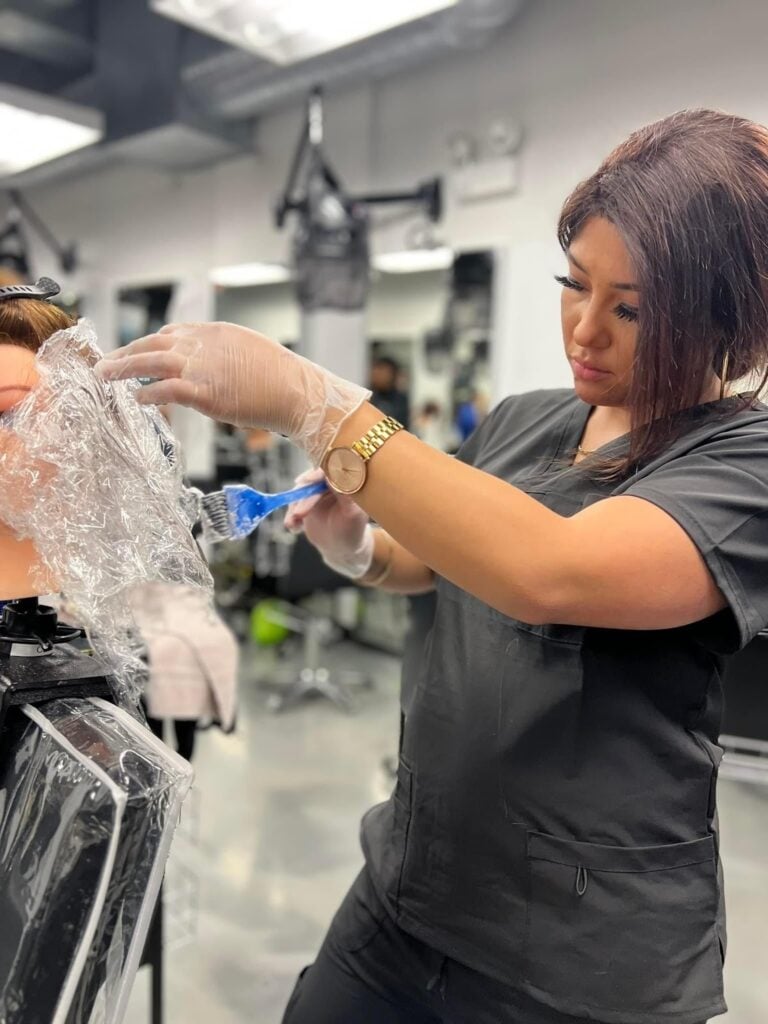
Students practice on mannequins first, then progress to live models under close instructor supervision. Understanding the chemistry, timing, application techniques, and safety procedures is essential before performing these services on paying clients.
For those interested in the financial side of this career, the top paying beauty careers in Illinois shows just how lucrative specializing in chemical services can be.
Call 815-455-5900 or email info@csa.edu to learn about our comprehensive cosmetology training covering all chemical services safely and effectively.