

Becoming a freelance makeup artist means building a career entirely on your own terms, but that freedom comes with real responsibility. You set your rates, choose your clients, and decide which freelance makeup artist jobs to take and which to pass on. There’s no manager scheduling your week or a salon handling your bookings. That’s genuinely exciting for the right person and genuinely overwhelming for the wrong one. Here’s what it actually takes to go from being a student at a makeup artist school to running a profitable freelance career.
Understanding Freelance vs Employment
Knowing how to become a freelance makeup artist starts with understanding what you’re actually signing up for.
As a freelance makeup artist, you’re self-employed. You work with clients on a project basis, set your own schedule, choose your rates, and operate across whatever locations make sense—clients’ homes, venues, studios, or on-site at events. Your income reflects your bookings, not a weekly paycheck.
Employment looks different. Working for a salon, spa, makeup counter, or beauty brand means regular income, set hours, and someone else handling the business side. You trade flexibility for stability.
Many working artists combine both, especially early on. Maintaining part-time employment while building freelance clientele reduces the financial pressure of inconsistent bookings during the first year or two. It’s a practical approach that a lot of successful freelancers used to get started. If you’re still figuring out which direction fits you best, our guide on best beauty jobs for your personality can help clarify where makeup artistry sits relative to other paths.
The freelance path suits people who are self-motivated, comfortable with income fluctuation, and genuinely want to run a business—not just do makeup. If predictable income and structured days are what you need, pure freelancing is a harder road.
Getting Proper MUA Training and Licensing
Training matters more than beginners typically expect. Social media tutorials teach technique, but they don’t cover sanitation protocols, skin analysis, professional color theory, or the standards required when you’re working on paying clients who trust you with their appearance.
Illinois doesn’t require a standalone freelance makeup artist license, but most serious working artists complete either an esthetics or cosmetology program.
Our makeup artist school guide covers what to look for in a program and how different training paths compare.
Cosmetology programs offer even broader training, adding hair styling to your service menu increases your value significantly, particularly for bridal and special event work where clients want one trusted professional handling everything.
A freelance hair & makeup artist commands higher rates and books more consistently than someone offering one service alone. Specialized makeup courses through private schools and workshops are another route. These range from weekend intensives to multi-month programs, with quality varying considerably.
Whatever path you take, formal training provides the sanitation knowledge, color theory foundation, and professional credibility that separates working makeup artists from hobbyists with Ring lights. Clients booking for their wedding day or an important event are not going to hand their face to someone without credentials.
👉 If cost is a concern at this stage, our guide on how to pay for beauty school covers financial aid, grants, and scholarships available to students in Illinois.
Building Your Professional Kit
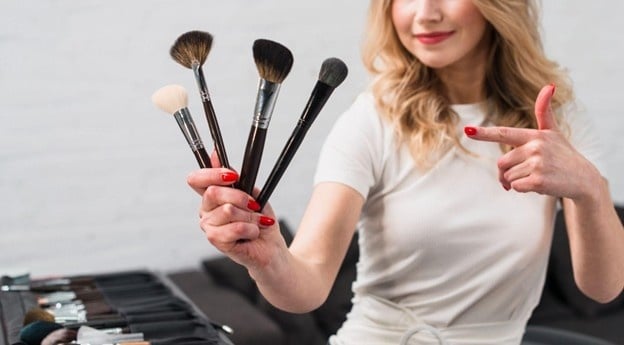
Your kit is your mobile business. Everything you need to serve any client, in any setting, travels with you. Plan to invest $1,500 to $3,000 building a comprehensive kit. That range feels steep until you work a few jobs and understand why quality products matter, they perform better, photograph better, and hold up under real working conditions. Our guide to the essential cosmetology kit covers what every professional needs across tools, products, and supplies.
Foundation coverage is where new artists often get caught. You need a range spanning light to deep skin tones with cool, warm, and neutral undertone options. A solid understanding of skin tone undertones is what makes this practical. Knowing how to read undertones on real clients is what allows you to serve the full spectrum of people who book you. If you can only serve clients who match your own complexion, you’ve eliminated a significant portion of potential bookings before they start.
Eye shadow palettes should cover neutrals for everyday work and bolder options for editorial or event looks. Professional brushes, foundation, powder, blush, multiple eye shadow, lip, apply product more precisely and last years with proper care. Don’t cut corners here.
Sanitation supplies are non-negotiable: brush cleaner, alcohol spray, disposable applicators, clean towels. You’re working on multiple faces, and cross-contamination is a genuine health issue. Professional programs emphasize this because it’s not optional.
Portable lighting handles the reality of on-location work. Venue lighting is unpredictable. A ring light or LED panel that travels easily ensures accurate color work regardless of where you’re set up.
Budget for regular replenishment. Mascara expires every three months. Liquid products have limited shelf lives. Staying current on professional-grade product lines is part of the job. Our overview of top skincare brands for cosmetology is a useful reference when building or upgrading your kit.
Setting Your Rates and Pricing Strategy
Pricing is where a lot of new freelancers make costly mistakes—usually by charging too little and then wondering why the business isn’t sustainable.
Research your local market first. Entry-level freelance makeup artists typically charge $50 to $100 for basic applications. Experienced working artists command $150 to $300 or more depending on service complexity and market. Our guide to top paying beauty careers in Illinois gives useful context on what experienced professionals earn across different beauty specialties, which helps calibrate where makeup artistry sits in the broader market.
Then calculate your actual costs: product usage per service, travel time and mileage, kit maintenance, freelance makeup artist insurance, quarterly taxes, and general business expenses. Many beginners price based only on time, not true cost of delivery. That’s a reliable path to burnout.
Structure tiered pricing by service type. Basic event makeup prices lower than complex bridal work involving trials, longer application time, and early morning on-location calls. The stakes and the workload are different, and pricing should reflect that.
Bridal makeup carries premium rates for good reason—the pressure is real, the timeline is unforgiving, and brides are depending on you for one of the most documented days of their lives. Charge accordingly.
Trial runs for brides should always carry a fee—typically 50 to 75% of the wedding day rate. Your time, expertise, and products have value regardless of whether it’s the rehearsal or the day itself.
Require deposits at booking, typically 25 to 50% of the total. Deposits protect you from cancellations and no-shows that cost you real bookings you could have accepted.
Travel fees for on-location work outside your immediate area need to be built in from the start. Calculate mileage and time before quoting any on-location job.

Marketing Yourself Effectively
Knowing how to become a freelance makeup artist technically is only half the equation. The other half is making sure the right clients can find and trust you.
Instagram remains the primary platform for makeup artists. Post consistently, use relevant hashtags, tag locations, and engage actively with your local beauty community. Your Instagram functions as a living portfolio—it’s often the first place a potential client goes after hearing your name. Our guide on using Instagram and TikTok to grow a beauty business in Illinois covers the specific strategies that actually move the needle for beauty professionals in this market.
Build a professional website or at minimum a polished business page. Include your portfolio, service list, general pricing, booking process, and clear contact information. The goal is making it effortless for someone to go from discovering you to booking you.
A Google My Business listing helps local clients find you in search results. Fill it out completely with photos, services, hours, and contact details.
Wedding vendor relationships are among the most valuable marketing investments you can make. Photographers, venues, planners, and hair stylists work with brides constantly and refer trusted makeup artists. Build genuine relationships with these people, attend networking events, collaborate on styled shoots, and follow through reliably on every job that comes through a referral.
Word-of-mouth from satisfied clients is still the most effective marketing that exists. Deliver consistently excellent service, follow up after jobs, and make it easy for happy clients to refer friends with a simple referral incentive program.
Managing Bookings and Client Relationships
How you run the business side of freelancing is what keeps clients returning and referring others.
Invest in scheduling software. Calendly, Acuity, or Square Appointments all work well. Clients can book available times, pay deposits, and receive automatic confirmations without a single back-and-forth message. It looks professional and saves you hours every week.
Create contracts outlining services, pricing, payment terms, and cancellation policies. Contracts protect both parties and eliminate the misunderstandings that damage relationships and cost you money.
Respond to inquiries within 24 hours. Slow responses lose bookings to whoever replied faster. Even if you’re unavailable for the requested date, a quick response with alternatives demonstrates professionalism.
For bridal work especially, thorough consultations before the service are essential. Understand client expectations, skin concerns, style preferences, and any product allergies or sensitivities. Inspiration photos help align expectations so there are no surprises on the day.
Arrive early. Punctuality under pressure, particularly at weddings, is one of the most important things clients remember about working with you.
Follow up after every service with a thank you and a gentle request for a review. Positive reviews on Google or Facebook consistently generate new bookings.
Handle complaints directly and without defensiveness. Listen, apologize, and offer to make it right. Your reputation is built as much on how you handle problems as on your technical work. The top traits of successful hairstylists apply equally to makeup artists: professionalism, reliability, and genuine care for clients are what build lasting careers in any beauty discipline.
Understanding Business Legalities
Running a freelance makeup artist business means running a real business, with real legal and financial obligations. Register your business name if you’re operating under anything other than your personal name. This protects your brand and establishes professional credibility.
Freelance makeup artist insurance is not optional. It’s essential. Professional liability coverage protects you if a client has an adverse reaction or files a claim against your services. Coverage typically runs $200 to $500 annually, which is a small cost relative to what a lawsuit could cost you without it.
Track every dollar of income and every business expense. As a self-employed freelancer, you’re responsible for quarterly estimated tax payments. Accounting software or a good accountant makes this manageable and helps you capture deductions (kit supplies, continuing education, marketing costs, mileage, insurance premiums) that significantly reduce your tax burden.
Understand whether sales tax applies to your services in Illinois, and if so, how to collect and remit it properly.
Consider your business structure. Operating as a sole proprietor is the simplest starting point, but an LLC provides liability protection worth considering once your business is generating consistent income. Many freelance makeup artists eventually expand into owning their own space, if that’s a longer-term goal. Our guide on how to open a salon in Illinois outlines what that process involves.
Makeup Artist Resume Freelance Edition
A makeup artist resume for freelance work looks different from a traditional employment resume. Lead with your portfolio link. It does more work than any written description. Include your training credentials, any certifications, and a brief professional summary describing your specialty and the types of clients you serve.
List experience by project type rather than employer: bridal, editorial, special events, commercial, film, or whatever categories reflect your actual work. Include notable clients or projects where appropriate, and always list your professional social media handles prominently.
Keep it clean, one page, and easy to scan. The resume supports the portfolio, but it doesn’t replace it. If you’re wondering whether a cosmetology license adds value to a freelance makeup artist resume, our piece on whether a cosmetology license is needed to be an MUA addresses that question in more detail.
📚 The freelance makeup artistry career path is genuinely achievable with proper training, business fundamentals, and consistent effort. Ready to start? Contact us at 815-455-5900 or info@csa.edu to learn about our makeup artistry training programs.