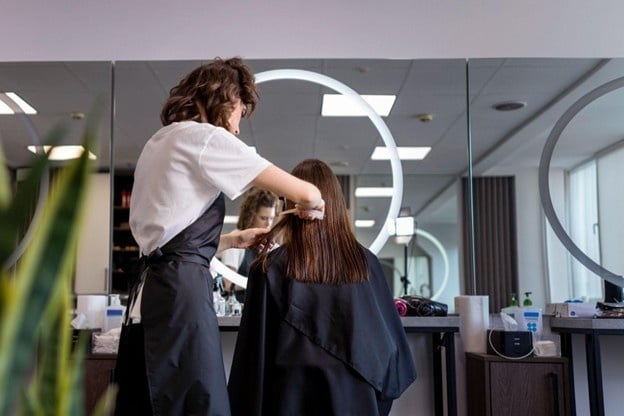



We had a student last year who worked in a cubicle for six years. Good pay, decent benefits, soul-crushing boredom. Now she owns a booth at a salon in Schaumburg. She sets her own schedule, chooses her clients, and actually loves Monday mornings. Her income doubled. Her stress dropped by half. That’s a story we see constantly at Cosmetology & Spa Academy. Today, we’re going to make a real and practical analysis to answer the question “what are the benefits of becoming a cosmetologist”.

You Get Paid to Be Creative Every Single Day
Most jobs squeeze creativity into hobbies. Weekends. “Someday when we have time.”
Cosmetology puts creativity at the center of your income. You’re solving visual problems, working with color, shape, and texture, making people feel confident in their own skin.
Every client brings something different. Different hair texture, face shape, style preferences, lifestyle needs. You’re not following a script. You’re creating custom solutions that work for that specific person.
We watch our students discover this during training. The moment they realize they can take a technique we taught and adapt it (add their own twist) that’s when it clicks. This isn’t about following rules. It’s about understanding principles and applying them creatively.
Some days you’re doing natural, barely-there makeup. Other days you’re creating dramatic color transformations. The variety keeps your brain engaged in ways repetitive work never could.
And here’s the best part: clients pay premium prices for creativity. The stylists who make the most money aren’t just technically competent. They’re artists who bring vision to every service.
Our cosmetology program teaches technical skills, but we also encourage creative thinking. That combination is what builds successful careers.
The Schedule Flexibility Is Actually Real
We hear skepticism about this one. “Flexible schedule” usually means “work whenever we tell you.” But cosmetology is different. Once you build experience and clientele, you control your time in ways most careers don’t allow.
Booth renters set their own hours completely. Want to work Tuesday through Saturday and take Sunday-Monday off? Done. Prefer shorter, more frequent weeks? That works too. Need to block out time for your kid’s school events? You’re the boss.
Even employed stylists have more flexibility than typical jobs. Most salons need coverage across various shifts, so you can often negotiate schedules that fit your life.
We’ve trained single parents who work while their kids are in school. Students who maintain weekend jobs while building their cosmetology careers. People who travel extensively and work intensively between trips.
Try doing that in a corporate setting. Your manager would laugh you out of the office.
The catch? Building this flexibility takes time. Entry-level positions have less control. You’re earning your stripes, building skills, and establishing yourself. But the path to autonomy is clear and achievable.
That freedom isn’t theoretical. It’s how this industry actually functions once you’ve proven yourself.
Your Income Grows With Your Skills
Most jobs have salary caps. You hit a ceiling and that’s it. Maybe small cost-of-living increases if you’re lucky.
Cosmetology salary has no ceiling. Your income is directly tied to your skill level, speed, client relationships, and business savvy.
We’ve seen graduates start at $25,000 their first year and earn $65,000 three years later. Not through luck. Through building their skills, their clientele, and their reputation.
Here’s how it works: As you get faster and better, you see more clients per day. As your reputation grows, you can charge more per service. You can then command premium pricing as you add specialized skills such as:
- event makeup artistry,
- balayage,
- extensions,
- advanced skincare treatments.
Then there’s the product commission, tips, and retail sales that supplement service income. A skilled cosmetologist with strong client relationships often makes 30-40% more than their base service fees through these additional revenue streams.
At CSA, we teach business skills alongside technical training because income isn’t just about being good with hair or makeup. It’s about understanding pricing, client retention, booking strategies, and marketing yourself effectively.
The stylists earning $70,000-$100,000+ aren’t working twice as many hours as those earning $30,000. They’re working smarter. Better services, higher prices, loyal clients, efficient scheduling.

You Build Real Relationships With People
Some careers treat people like transactions. Process them. Move on. Next. Cosmetology is different. You build ongoing relationships with clients who trust you with how they present themselves to the world.
We hear stories from our graduates about clients who become friends. About being invited to weddings, baby showers, and graduations. About clients who follow them from salon to salon because the relationship matters.
This isn’t just feel-good fluff. These relationships are your business foundation. Loyal clients book regularly, refer friends, and provide stable income even when the economy wobbles.
The trust clients place in you is real. They’re vulnerable in your chair. Bad haircut before a job interview? That’s genuinely stressful. Skin reaction before a first date? That matters to them.
When you do good work and treat people well, they remember. They come back. They tell their friends, family, and coworkers.
Those relationships happen because cosmetology puts you in direct, repeated contact with people during meaningful moments in their lives. You’re not filing reports. You’re making people feel confident and cared for.
The Job Market Is Stable and Growing
Recession happens. Companies downsize. Entire industries collapse. People still get haircuts. Weddings still happen. Job interviews require presentable appearances. Self-care isn’t optional. It’s how people maintain confidence in uncertain times.
We’ve been training cosmetologists for decades. We’ve seen economic ups and downs. The beauty industry stays remarkably stable because these services are essential to how people function in society.
The Bureau of Labor Statistics projects a 5% growth in cosmetology careers from 2024 to 2034. Baby boomers are aging and spending more on personal care. Younger generations view salon services as lifestyle necessities, not luxuries.
Even during the 2020 pandemic shutdowns, pent-up demand exploded once salons reopened. People desperately needed these services. Many stylists came back busier than before.
Beyond traditional salons, opportunities exist in spas, resorts, cruise ships, film and television, theater, fashion, bridal services, mobile businesses, and product education.
The skills you learn open multiple career paths.
We emphasize this versatility in our cosmetology training. You’re not learning one narrow skill set. You’re building a foundation that transfers across multiple settings and specializations.
Job security isn’t guaranteed anywhere. But cosmetology offers more stability and flexibility than most people realize.
You Can Work Anywhere
Hate winter? Work in Florida for six months. Miss your hometown? Move back! Salons need stylists everywhere.
Cosmetology licenses transfer across states with relatively simple reciprocity processes. Your skills work in small towns and major cities. Rural areas and beach communities. Everywhere people live, they need these services.
We’ve had graduates move to Colorado, California, North Carolina, Arizona, and a dozen other states. Their careers traveled with them because the skills are universal and in-demand.
This geographic flexibility extends internationally too. Cruise ships hire cosmetologists for extended contracts. Resorts in tourist destinations need seasonal staff. Some graduates work abroad, providing services to English-speaking expat communities.
Try relocating with a career tied to one specific company or industry cluster. You’re starting over, rebuilding networks, hoping your experience translates.
Cosmetologists walk into a new city, get licensed, and start working within weeks. Your portfolio and references matter more than geographic history. That kind of freedom is rare. We don’t take it for granted, and we make sure our students understand this advantage.

Low Barrier to Entry, High Ceiling for Success
Four-year degrees cost $80,000-$200,000 and take half a decade. Then you’re entry-level, starting at the bottom.
Cosmetology training costs a fraction of that and takes under a year full-time. You’re earning money in your field within months of starting. We’re not dismissing traditional education. But the return on investment comparison is striking. Lower debt, faster entry to earning income, and no ceiling on how far you can grow.
This makes cosmetology accessible to people from all backgrounds. Single parents. Career changers. Recent high school graduates. People who can’t afford or don’t want traditional college.
We’ve trained 18-year-olds fresh from high school and 45-year-olds changing careers entirely. The industry welcomes both because skills and work ethic matter more than credentials or pedigree.
Financial aid and payment plans make training accessible even with limited resources. At info@csa.edu, we help students navigate these options because we believe talent shouldn’t be sidelined by financial barriers.
You’re Part of Important Life Moments
Weddings. Proms. Job interviews. First dates. Graduation photos. Cancer recovery. Gender transitions. Post-divorce reinventions. Cosmetologists participate in meaningful moments when appearance connects to identity, confidence, and life transitions.
We hear these stories constantly from our graduates. The bride who cried happy tears. The teenager who finally felt beautiful for prom. The cancer survivor who saw herself again after losing her hair. The woman who got the job because she felt confident in the interview.
You’re not just cutting hair or applying makeup. You’re helping people feel ready for what matters to them.
This emotional component isn’t for everyone. Some days it’s heavy. Clients share struggles, insecurities, and life challenges. You become part counselor, part artist, part friend. But most professionals in this field find this aspect deeply rewarding. You’re making a difference in people’s lives in immediate, visible ways.
We emphasize this in our training because technical skills alone don’t make great cosmetologists. Understanding the emotional and psychological aspects of appearance creates professionals who truly excel.
So What’s the Catch?
We promised honesty. This career has real benefits, but it’s not effortless.
You’re on your feet all day. Your body takes wear—backs, legs, hands, shoulders. Self-care and ergonomics matter. Building clientele takes time. You need to be patient.
Difficult clients exist. So do no-shows, last-minute cancellations, and people who expect miracles with damaged hair. Continuing education is necessary. Techniques evolve. Products change. You’re constantly learning or falling behind.
But here’s the thing: most careers have downsides. The question is whether the benefits outweigh the challenges.
For people who value creativity, flexibility, relationship-building, and income potential, cosmetology offers something rare. A sustainable career doing work that feels meaningful and pays well.
Your Next Step
Call 815-455-5900 to schedule a campus tour. Visit our campuses at:
- Crystal Lake
- Elgin
- Rockford
- Schaumburg
Book a tour and see our training floors in action. Talk with current students. Meet our instructors. Ask every question you have.
Or contact us if you prefer starting with a conversation before visiting. We’ll answer your questions honestly, explain program options, and help you understand what cosmetology training actually involves.